RFID Standards & Regulations
RFID only works at scale because tags, readers and software from different makers follow the same rules. This chapter maps the key air-interface and data standards for LF, HF, NFC and UHF, and explains the radio regulations that decide which UHF frequencies and power levels are legal in India, Europe and the US.
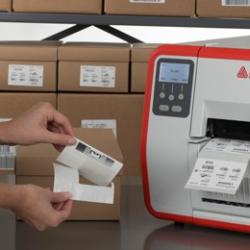
- Air-interface standards define how a reader and tag talk over the radio; data standards define what the stored bits mean.
- Passive UHF RFID worldwide is EPC UHF Gen2 (Gen2v2), published by ISO as ISO/IEC 18000-63 and promoted under the RAIN RFID brand.
- HF uses ISO/IEC 14443 (proximity, cards and NFC) and ISO/IEC 15693 (vicinity, libraries and labels); LF animal ID uses ISO 11784/11785.
- Radio rules differ by region: India allows UHF RFID licence-free in 865-867 MHz, Europe uses 865-868 MHz, the US uses 902-928 MHz.
- Following standards protects you from vendor lock-in and lets tags from one supplier work with readers and software from another.
Why RFID standards matter
Imagine buying 10 lakh UHF labels from one supplier, readers from a second and software from a third, and finding that nothing talks to anything else. In the early 2000s that was a real risk: many RFID systems used proprietary protocols, and a tag from one vendor would simply stay silent in front of another vendor's reader. Standards changed that. Today a retailer in Mumbai can tag garments in a factory in Tiruppur, read them at a distribution centre in Bhiwandi and scan them again in a store, using hardware from completely different manufacturers.
Standards give you four practical benefits:
- Interoperability - tags, readers, printers and middleware from different vendors work together.
- Choice and price competition - you are not locked into a single supplier for consumables, which matters because tags are a recurring cost.
- Data sharing - trading partners can understand each other's tag data without custom translation.
- Legal compliance - radio regulations tell you which frequencies and power levels you may use, and certified equipment respects them.
Before going further, revise the basics of RFID frequencies if needed, because almost every standard is tied to one frequency band.
Air-interface standards vs data standards
The single most useful idea in this chapter is that RFID standards come in two layers, and you need both.
Air-interface (protocol) standards
These define how a reader and a tag communicate over the radio: the carrier frequency, modulation and encoding, data rates, the command set (Query, Read, Write, Lock and so on) and the anti-collision method used to read many tags at once. EPC Gen2, ISO/IEC 14443 and ISO/IEC 15693 are air-interface standards. If two devices share the same air-interface standard, they can exchange bits.
Data (content) standards
These define what those bits mean: how a product number, serial number, asset ID or library item ID is laid out in memory. The GS1 EPC Tag Data Standard, ISO 28560 for libraries and ISO 11784 for animal ID are data standards. Two systems can share an air interface and still fail to understand each other if they encode data differently.
There is also a third, higher layer: system and software standards such as LLRP (how software controls a reader) and EPCIS (how business events are shared). We touch on these below and cover them fully in RFID Middleware & Software.
In the real world
UHF: EPC Gen2, Gen2v2 and ISO/IEC 18000-63
Passive UHF RFID (860-960 MHz) is dominated by one protocol: the EPCglobal UHF Class 1 Generation 2 air interface, usually just called Gen2. It was developed by EPCglobal, now part of GS1, and ratified in 2004. ISO adopted it as ISO/IEC 18000-6 Type C, and in the current edition of the series it is published as ISO/IEC 18000-63. For practical purposes "Gen2", "ISO 18000-6C" and "ISO 18000-63" describe the same interoperable protocol.
Gen2 introduced features that made large-scale UHF practical:
- A slotted, probabilistic anti-collision method (the Q algorithm) that lets a reader inventory hundreds of tags per second.
- Sessions (S0-S3) and inventoried flags, so multiple readers can work in the same area and tags already counted can stay quiet.
- Four memory banks (Reserved, EPC, TID, User) - explained in EPC Encoding & Tag Memory.
- Select commands to address subsets of tags, plus Lock and Kill commands with 32-bit passwords.
- Dense reader modes to reduce interference where many readers operate together.
Gen2v2
Version 2.0 of the specification, released in 2013 and commonly called Gen2v2, is backward compatible with Gen2 and adds optional security and privacy features: an Untraceable command that lets a tag hide part of its EPC, TID or user memory and reduce its read range; Authenticate and related commands that allow cryptographic tag (and reader) authentication using crypto suites defined in the ISO/IEC 29167 family; and file and privilege management. Not every Gen2v2 chip implements every option, so always check the chip datasheet. Security details are in RFID Security & Privacy.
RAIN RFID
RAIN RFID is not a separate technology. It is the brand name used by the RAIN RFID Alliance, an industry group formed in 2014 to promote passive UHF RFID based on Gen2 / ISO/IEC 18000-63. When you see "RAIN" on a label or reader, read it as "standard UHF Gen2".
HF and NFC standards (13.56 MHz)
High frequency RFID at 13.56 MHz has several standards, and choosing the right one depends on range and use case.
ISO/IEC 14443 (proximity cards)
ISO/IEC 14443 covers contactless proximity cards with a working range of typically a few centimetres, up to about 10 cm. It comes in two variants, Type A and Type B, which differ in modulation and anti-collision but serve the same purpose. Part 4 of the standard defines a transmission protocol that carries ISO/IEC 7816-4 style commands, which is why smart cards, e-passports, metro and payment cards use it. MIFARE and NTAG products are built on 14443 Type A.
ISO/IEC 15693 (vicinity cards)
ISO/IEC 15693 is designed for longer HF ranges - typically up to around a metre with a large reader antenna, and much less with handheld readers or small tags. It is popular for library books, laundry, pharmaceutical items, access cards and industrial labels. NXP ICODE and TI Tag-it are well known 15693 chip families.
ISO/IEC 18000-3
The ISO/IEC 18000 series defines air interfaces by frequency. Part 3 covers 13.56 MHz and includes modes that align with ISO/IEC 15693 (Mode 1) and a faster mode designed for item-level use (Mode 3). Other parts cover LF below 135 kHz (18000-2), UHF (18000-63 and siblings) and active 433 MHz (18000-7).
NFC Forum standards
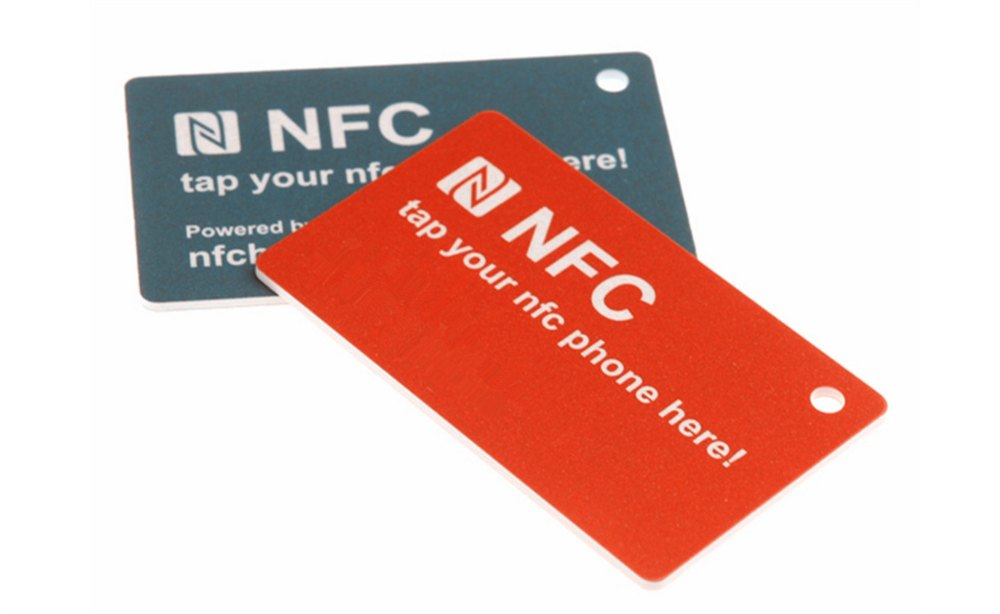
NFC (Near Field Communication) is a subset of HF RFID. It is defined by ISO/IEC 18092 and the specifications of the NFC Forum, which also define the NDEF message format used to store URLs, text and other records. To guarantee that any NFC phone can read a tag, the NFC Forum defines tag types:
| NFC Forum type | Based on | Typical chips / use |
|---|---|---|
| Type 1 | ISO/IEC 14443 A | Early low-memory tags; rarely used today |
| Type 2 | ISO/IEC 14443 A | NTAG21x, MIFARE Ultralight - posters, labels, smart packaging |
| Type 3 | FeliCa (JIS X 6319-4) | Common in Japan for transit and payments |
| Type 4 | ISO/IEC 14443 A/B with ISO 7816-4 commands | MIFARE DESFire, NTAG 424 DNA - secure and authenticated tags |
| Type 5 | ISO/IEC 15693 (NFC-V) | ICODE SLIX family - longer-range HF labels readable by phones |
LF standards for animal identification
Low frequency RFID (roughly 125-134.2 kHz) is the global choice for animal identification because LF penetrates tissue and water well. Three ISO standards matter:
- ISO 11784 - the code structure: a 64-bit identifier that includes a country code (or manufacturer code) and a unique national identification number, so every animal ID is globally unique.
- ISO 11785 - the technical concept: operation at 134.2 kHz and two transmission methods, FDX-B (full duplex) and HDX (half duplex). A compliant reader must read both.
- ISO 14223 - advanced transponders that extend 11784/11785 with additional memory and read/write functions while staying backward compatible.
These are used for pet microchips, cattle ear tags, rumen boluses and wildlife tracking. Wherever a livestock or pet identification programme uses RFID, in India or abroad, ISO 11784/11785 compliance is the normal requirement. LF products are covered on our LF RFID tags page.
Data standards: GS1 EPC TDS, ISO 28560 and others
GS1 EPC Tag Data Standard (TDS)
The GS1 EPC Tag Data Standard defines how GS1 identifiers are encoded in the EPC memory bank of a UHF tag. It specifies schemes such as SGTIN (serialised trade items - a GTIN plus serial number), SSCC (logistics units such as pallets), SGLN (locations), GRAI (returnable assets) and GIAI (individual assets). It also defines the URI formats used in software, such as urn:epc:id:sgtin:.... Companies in India obtain their GS1 Company Prefix from GS1 India. A step-by-step SGTIN-96 example is in the next chapter.
A companion GS1 standard, the Tag Data Translation (TDT) standard, provides machine-readable rules for converting between binary, URI and barcode forms.
ISO 28560 for libraries
ISO 28560 defines a data model for RFID in libraries: which data elements exist (primary item identifier, owner library, set information and more) and how they are encoded. Earlier parts focus on HF ISO/IEC 15693 tags; a later part addresses encoding on UHF tags. Following it means a library can change RFID vendors without retagging its whole collection.
Other data and application standards
- ISO/IEC 15961 and 15962 - a general data protocol for encoding data objects on RFID tags.
- ISO 17363 to 17367 - supply chain applications of RFID, from freight containers down to product tagging.
- ISO/IEC 18046 and 18047 - test methods for tag/reader performance and conformance.
- EPCIS (ISO/IEC 19987) and the Core Business Vocabulary (ISO/IEC 19988) - for sharing "what, when, where, why" events between trading partners.
- LLRP - the EPCglobal Low Level Reader Protocol for controlling readers from software.
UHF regulations: India, Europe, the US and beyond
LF and HF bands (125-134 kHz and 13.56 MHz) are available almost everywhere. UHF is different: each country allocates its own slice of the 860-960 MHz range and sets its own power limits. A UHF reader must be set to the correct region, and the tag must be tuned to work well in that band.
| Region | Band | Regulation / authority | Key points |
|---|---|---|---|
| India | 865-867 MHz | Licence-exempt under WPC (Department of Telecommunications) | No frequency licence needed; limits typically 1 W transmitter power and 4 W EIRP. Equipment generally needs WPC Equipment Type Approval. |
| Europe (EU/EEA and many others) | 865-868 MHz | ETSI EN 302 208 | Four high-power channels of 200 kHz around 865.7, 866.3, 866.9 and 867.5 MHz, up to 2 W ERP; newer editions also add an upper band around 915-921 MHz where national rules allow it. |
| United States, Canada | 902-928 MHz | FCC Part 15 (US), ISED (Canada) | Frequency hopping across many channels; up to 1 W conducted and 4 W EIRP. |
| China | 920-925 MHz (also 840-845 MHz) | National radio regulator | Separate allocation; global tags are needed for export flows. |
| Japan | Around 916-921 MHz | National radio regulator | Specific channel plan and licensing categories. |
The Indian band sits inside the European band, so many European-region readers can be configured for India. Always confirm with your supplier that the specific model is approved and set to the Indian region.
What this means for tags
Passive UHF tags do not transmit on their own, so they are not licensed in the same way, but their antenna is tuned. "Global" inlays are designed to perform acceptably from 860 to 960 MHz; some inlays are optimised for either the EU/India band or the US band. A tag tuned for 915 MHz may lose a noticeable part of its read range at 866 MHz. If your goods move between India, Europe and the US, choose a global inlay and test it in each band. Browse options on our UHF RFID labels page.
How to use standards when planning a project
- Pick the frequency and air interface first. Bulk reading of cartons and assets points to UHF Gen2; phone interaction points to NFC; animals point to LF ISO 11784/11785; libraries usually point to HF 15693.
- Pick the data standard next. If items move between companies, use GS1 EPC schemes with your own GS1 Company Prefix rather than a home-made numbering scheme.
- Check regional rules for every country where you will read the tags, and buy readers certified for those regions.
- Specify standards in purchase orders - for example "ISO/IEC 18000-63 compliant inlay, global band, SGTIN-96 encoded, TID serialised".
- Verify, do not assume. Test samples from each supplier with your actual readers and software before a large order.
If you are unsure which standard fits your use case, our RFID consulting team can review your requirements and regional constraints with you.
Help India adopt this fast-growing technology - teach, consult or build projects with Indian RFID.
Frequently asked questions
Is EPC Gen2 the same as ISO 18000-6C?
Practically yes. The EPCglobal UHF Gen2 protocol was adopted by ISO as ISO/IEC 18000-6 Type C, which is now published as ISO/IEC 18000-63. Tags marked Gen2, ISO 18000-6C or ISO 18000-63 interoperate.
Which UHF frequency is legal for RFID in India?
India permits UHF RFID in 865-867 MHz without a frequency licence, under WPC rules, with transmitter power typically limited to 1 W and 4 W EIRP. Equipment should still carry the required type approval.
Can I use a US (FCC) UHF reader in India?
Not legally as-is. A reader built for 902-928 MHz transmits outside the Indian band. Most modern readers have region settings, but the device must be configured and approved for India.
Is NFC a different technology from HF RFID?
NFC is a subset of 13.56 MHz HF RFID. It builds on ISO/IEC 14443, FeliCa and ISO/IEC 15693, and adds the NFC Forum specifications for tag types and the NDEF data format.
What standard do library RFID systems use?
Most library systems use HF ISO/IEC 15693 tags with data encoded according to ISO 28560, which defines a common data model so books tagged by one vendor can be read by another vendor's equipment.
Join the 1-month Certified RFID Specialist Program - live online. New batch 12 January 2027.