RFID Encoders Explained: How RFID Chips Are Encoded
Encoding is the step that turns a blank RFID tag into a useful identity by writing data into its chip, protecting it with passwords and locking it. This chapter explains what encoding really involves for UHF, HF/NFC and LF tags, how an RFID encoder works on both the radio side and the data side, and the different types of encoders available around the world and how to choose one.
- Encoding means writing the EPC or user data, setting access and kill passwords and locking memory; the factory TID is only read, never written.
- An RFID encoder is a reader/writer with a short-range or shielded antenna plus software that supplies unique data, verifies every write and logs the result.
- Writing needs more energy and a cleaner RF link than reading, so encoders use low power, near-field couplers and Select commands to talk to exactly one tag.
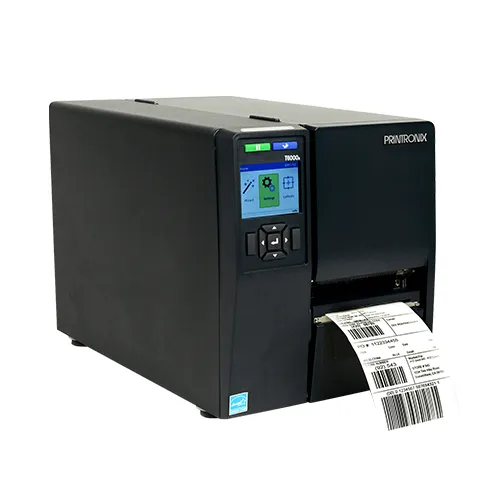
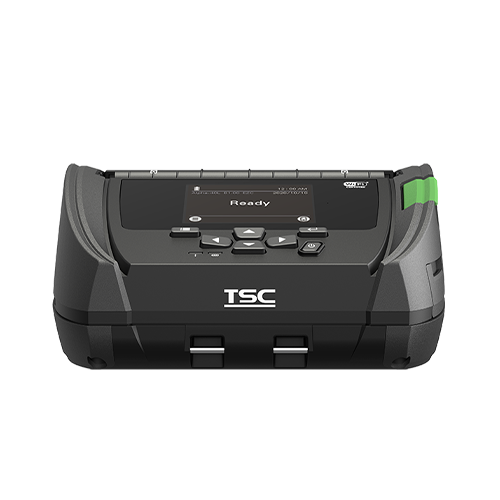
- Encoder types range from desktop USB units and RFID printers to handhelds, inline conveyor stations, roll-to-roll converting lines, NFC phones and embedded OEM modules.
- Buy the correct regional UHF version (India 865-867 MHz), keep an encoding database to prevent duplicate EPCs, and only encode tags you own.
What "encoding" an RFID chip actually means
A new tag already has a factory identifier and usually a default EPC, but nothing meaningful to your business. Encoding (also called programming, commissioning or writing) is the process of putting your data into the chip and protecting it so it stays correct for the life of the item.
Depending on the tag technology, encoding can include several separate operations:
- Reading the factory identifier - the TID on UHF chips or the UID on HF chips. It is locked by the chip maker; encoders only read it.
- Writing the identity - the EPC number on UHF tags, an NDEF record on NFC tags, or data blocks on HF and LF tags.
- Writing user memory - optional extra data such as a batch number, maintenance date or asset details, on chips that have user memory.
- Setting passwords - an access password that protects locked memory and a kill password that can permanently disable a UHF tag.
- Locking - making memory write-protected (lock) or permanently write-protected (permalock).
The steps differ by frequency band. For a refresher on the chips themselves see RFID Chips Explained.
How UHF, HF/NFC and LF tags are encoded
UHF EPC Gen2 (ISO/IEC 18000-63)
A Gen2 chip has four memory banks: Reserved (kill and access passwords, 32 bits each), EPC (a CRC, the Protocol Control or PC word, and the EPC number itself), TID (factory identifier, read-only) and optional User memory. Encoding a UHF tag means writing the EPC bank, optionally writing user memory, writing the two passwords into Reserved memory and then issuing a Lock command. Data is written in 16-bit words, using the Gen2 Write command (one word at a time) or BlockWrite (several words) where the chip supports it.
The PC word contains length bits that tell readers how many words of EPC to return. If you change the EPC length - for example from a 96-bit to a 128-bit number on a chip that supports longer EPCs - the PC length bits must be updated too, otherwise readers report a truncated or padded EPC.
HF and NFC (13.56 MHz)
- NTAG and other NFC Forum Type 2 tags - memory is organised in small pages. Encoding usually means writing an NDEF message (a URL, text or vCard) that any NFC phone can read, then optionally setting a password or making the tag read-only.
- MIFARE Classic - memory is divided into sectors, each protected by two keys (Key A and Key B) and access bits that control what each key may do. Encoding means writing data blocks and changing the default keys. The original MIFARE Classic security is known to be weak, so new access-control projects generally use more secure card families.
- ICODE and other ISO/IEC 15693 tags - memory is a series of blocks (commonly 4 bytes each). Encoding writes the blocks and can set fields such as AFI and DSFID, then lock individual blocks.
LF (125-134 kHz)
Many LF tags are simply read-only. An EM4100-type chip, for example, comes with a fixed factory ID that cannot be changed. Writable LF chips such as the T5577 and EM4305 can be programmed with an LF programmer: the T5577 can be configured to emulate several common LF formats, and the EM4305 is widely used for ISO 11784/11785 animal identification. Because a T5577 can mimic a read-only LF card, it is also the chip most often misused for cloning simple LF access cards - see the ethics section at the end.
In the real world
What data gets encoded
The chip only stores bits; your data standard gives them meaning. Common choices:
- SGTIN-96 - a GS1 product code (company prefix plus item reference) followed by a unique serial number. The standard choice for retail and apparel item tagging.
- SSCC-96 - identifies a logistics unit such as a carton or pallet.
- GRAI and GIAI - identify returnable assets and fixed assets respectively, widely used in asset tracking.
- Custom serials - in closed systems (a single factory, a library, a hospital) many projects simply write their own number scheme. Use a GS1 scheme whenever tags leave your premises, to avoid clashes.
- TID-based serialisation - because every chip TID is unique, some systems derive the EPC serial from the TID, or store the TID alongside the EPC in a database.
The bit-level maths of how a GTIN and serial become a 96-bit SGTIN - header, filter, partition and so on - is covered with a worked example in EPC Encoding & Tag Memory, so it is not repeated here.
Step-by-step: encoding a UHF Gen2 tag
Whether it happens inside an RFID printer or on a desktop encoder, a well-designed UHF encoding job follows the same sequence:
- Isolate one tag. Reduce transmit power and use a short-range antenna so only one tag is energised, and/or use the Gen2 Select command with a mask (for example on the TID) so only the intended tag responds.
- Read the TID. This confirms a tag is present, identifies the chip model (and therefore its memory size and features) and gives a unique reference for logging.
- Get the data. Request the next EPC from the encoding software or database, which reserves that serial so it cannot be issued twice.
- Write the EPC words. Write the new EPC into the EPC bank, and update the PC length bits if the EPC length changes.
- Write user memory if the application needs it.
- Verify. Read the EPC (and user memory) back and compare it with what was intended. A write command that reports success is not proof - always read back.
- Write passwords. Set the access password and, if used, the kill password. Never leave them at the default all-zero value if you plan to lock.
- Lock. Lock or permalock the EPC bank, passwords and user memory according to your data policy.
- Log. Record TID, EPC, time, operator or station and result, and mark the serial as used.
Why "adjacent tag encoding" happens
The most embarrassing encoding error is writing the right data to the wrong tag - the tag next to the intended one on a roll, a stack or a tray. It happens because UHF energy spreads well beyond the antenna: if power is too high, the antenna is not near-field, labels are closely spaced, or the job does not use Select, a neighbouring tag may answer first and get written. The cures are lower power, a coupler or shielded antenna, correct label pitch and position calibration, Select on TID, and verifying by TID rather than just "any tag in the field".
How an RFID encoder works
An RFID encoder is an RFID reader/writer combined with an antenna designed for very short range and software that controls what gets written. Most readers can write tags; an encoder is simply optimised for reliably writing one tag at a time.
The RF side
Writing to a passive chip's memory takes more energy than reading it, and the write operation needs a clean, uninterrupted link for longer. In practice this means that the reliable write range is noticeably shorter than the read range for the same tag and power. Encoders therefore usually reduce power: the goal is precision, not distance. They achieve strong, controlled coupling to one tag by:
- using a near-field antenna or coupler that produces a strong field only within a few millimetres to a few centimetres;
- placing the tag in a fixed position (a guide, a slot or the printer's media path) right over the coupler;
- adding shielding or RF-absorbing material around the encoding zone;
- using low, carefully tuned transmit power and the Select command.
The data side
The radio part is only half the job. The other half is making sure every tag gets correct, unique data:
- Data source - EPCs and user data come from the ERP or WMS, from label-design software, from a CSV file or from a serial counter. Data should never be typed by hand for production encoding.
- Encoding database - a central record of which serials have been issued, so two stations or two shifts can never write the same EPC.
- Verification and logging - every tag is read back, and the TID-to-EPC pairing is stored.
How an RFID printer encodes
An RFID printer packs the whole flow into one pass. As each label reaches the built-in encoder antenna, the printer reads the TID, writes the EPC and user data, reads it back, sets passwords and locks, and then prints the visible text, barcode and logo. If the tag fails at any step, the printer overstrikes the label with a VOID pattern (or marks it so it can be rejected) and repeats the job on the next label, so you never ship a label whose barcode and chip disagree. The complete printing workflow is covered in RFID Printing & Encoding.
Types of RFID encoders available worldwide
Encoders range from a pocket-sized NFC phone to a production line writing inlays at very high speed. The table summarises the main categories found around the world; multi-protocol desktop units handle UHF, HF and LF in one box, and embedded modules let machine builders add encoding inside their own equipment.
| Encoder type | How it works | Typical use | Relative volume |
|---|---|---|---|
| Desktop USB / Ethernet encoder | Small reader/writer with a built-in near-field antenna; UHF, HF/NFC, LF or multi-protocol versions | Encoding cards, hard tags, key fobs, small batches of labels, testing | Low |
| RFID printer-encoder | Thermal label printer with built-in encoder; desktop, mid-range and industrial classes | On-demand labels for shipping, assets, apparel, healthcare | Low to high |
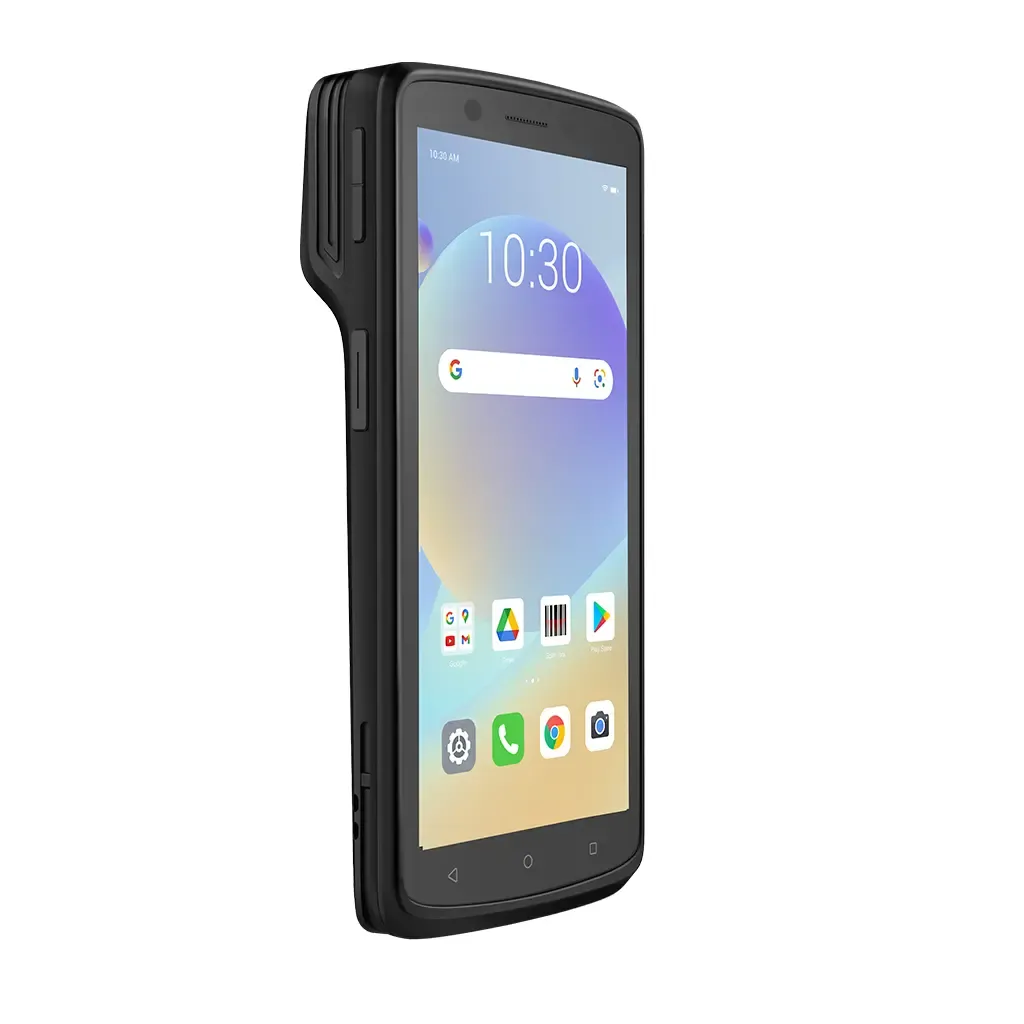
| Handheld reader as mobile encoder | Handheld UHF/HF reader running an encoding app, writing at very low power | Tagging fixed assets in place, re-encoding in the field | Low |
| Fixed reader in an encoding station | Fixed reader plus a near-field or shielded antenna, often in a tunnel or box, driven by PC software | Encoding cartons, garments, tools at a workbench | Medium |
| Inline / conveyor and print-and-apply | Encoder or RFID print engine mounted on a conveyor or applicator, triggered by sensors | Packing lines, distribution centres, pallet and case labelling | High |
| Roll-to-roll encoding and verification | Multiple encoder heads on a converting or inlay line, with marking or cutting of failed inlays | Label converters and service bureaus pre-encoding millions of labels | Very high |
| NFC smartphone and writer app | Phone's NFC radio writes NDEF and other NFC data | Marketing tags, small NFC projects, field configuration | Very low |
| Embedded encoder module | Compact reader module built into an OEM machine (kiosk, vending, packaging, laundry) | Automated equipment that writes tags as part of a process | Varies |
| LF programmer | 125-134 kHz writer for T5577, EM4305 and similar chips | Animal tags, LF key fobs and cards | Low |
RFID printer-encoders
The major label-printer manufacturers - including Zebra, TSC/Printronix, SATO and Honeywell - offer RFID-enabled versions of their desktop, mid-range and industrial thermal printers. See the RFID printers range for current options.
Handheld and fixed readers
Most handheld RFID readers can write tags through an app. They suit assets already installed in place, but the app must reduce power and confirm the TID before writing.
Inline, print-and-apply and roll-to-roll systems
For high volumes, encoding moves onto the line. Inline encoders write tags already applied to cartons or garments as they pass on a conveyor; print-and-apply systems print, encode, verify and apply labels automatically. At the top end, converters encode and verify inlays roll-to-roll at very high speed, so customers receive UHF RFID labels pre-encoded and ready to apply.
Regional versions: why the frequency band matters
HF (13.56 MHz) and LF encoders are essentially the same worldwide, but UHF encoders are sold in regional versions because each region allocates a different slice of the UHF band:
- Europe (ETSI): 865-868 MHz.
- India: 865-867 MHz, up to 4 W EIRP (1 W transmitter power), licence-exempt under WPC rules.
- USA, Canada and much of the Americas (FCC): 902-928 MHz.
- Japan: a band around 916-921 MHz.
- China: 920-925 MHz (with an additional 840-845 MHz allocation).
A tag usually works across the whole 860-960 MHz range, but the encoder's radio is certified for a specific region. Using an FCC unit in India means transmitting outside the permitted band, which is not legal, and its coupler may be tuned for the wrong frequency. Always buy the ETSI or India version, or a global model that is configured to the India profile, and check that the printer or encoder's region setting is correct after installation.
How to choose an RFID encoder
- Volume and speed - a few hundred tags a week is desktop-encoder or desktop-printer territory; thousands per shift needs an industrial printer or inline station; millions per month is a job for pre-encoded labels from a converter.
- Tag type - labels on a roll suit printers; cards, hard tags, key fobs and on-metal tags usually need a desktop encoder or station; tags already fixed on assets need a handheld.
- Frequency and protocol - UHF Gen2, HF ISO 15693, ISO 14443/NFC or LF; a multi-protocol unit helps if you handle several.
- Data source and integration - check that the encoder works with your ERP, WMS or label software, and that serials can come from a central database.
- Verification and logging - insist on read-back verification and an exportable log, especially when encoding for retail or export customers.
- Budget (indicative only) - NFC phones and desktop encoders sit at the low end, RFID desktop and industrial printers in the middle, and inline, print-and-apply and roll-to-roll systems at the top. Add software, integration, labels and training to the total.
Common encoding problems and fixes
| Problem | Likely cause | Fix |
|---|---|---|
| Wrong tag written (adjacent tag) | Power too high, no near-field coupler, labels too close, no Select | Lower power, use coupler or shielding, recalibrate position, Select on TID |
| Write failures near metal or liquids | Standard tag detuned by the surface, or encoding after application | Use on-metal tags, encode before applying, or use a station designed for the tag |
| Tag will not accept new data | Memory locked or permalocked, or unknown access password | Use the correct access password; permalocked tags cannot be changed and must be replaced |
| Duplicate EPCs in the field | Serials issued by several stations without a shared database, manual entry, adjacent writes | Central encoding database or reserved ranges per station; TID-based checks; audit logs |
| Poor performance or no writes at all | Wrong regional version or region setting | Use the ETSI/India version and set the correct region profile |
| High void rate on an RFID printer | Calibration, wrong media settings or inlay position, damaged inlays | Recalibrate for the media, set correct encoding position and power, check label storage |
Best practices, India context and ethics
Best practices
- Design the data first: scheme, filter value, user memory map, passwords and lock policy, all documented.
- Always read back and compare; log TID, EPC, time and station for every tag.
- Use a central encoding database or reserved serial ranges so duplicates are impossible.
- Store passwords securely, never on the label or in shared spreadsheets.
- Recalibrate printers whenever the label stock changes, and track the void rate as a quality metric.
India context
Indian users should register with GS1 India before encoding GS1 numbers, buy UHF encoders and printers configured for the 865-867 MHz band, and, for exports, follow each buyer's tagging manual exactly - many retailers audit EPC format, chip type and encoding quality. If encoded data links to people, such as staff ID cards or patient wristbands, handle it in line with the DPDP Act 2023.
Ethics and legality
Only encode tags that you own or are authorised to program. Using writable chips to copy access cards, transit cards or other credentials belonging to someone else can be illegal and defeats the security of the organisation that issued them. If your own access control relies on easily copied LF or legacy HF cards, the answer is to move to a more secure card technology - see RFID Security & Privacy.
If you want hands-on practice with encoders, printers and EPC data design, the Indian RFID courses cover encoding labs alongside the rest of RFID system design.
Watch & learn
Videos are from YouTube and their respective creators; they play only when you click.
Help India adopt this fast-growing technology - teach, consult or build projects with Indian RFID.
Frequently asked questions
What is an RFID encoder?
An RFID encoder is a device that writes data into RFID tag chips. It is essentially an RFID reader/writer with a short-range or shielded antenna, used together with software that supplies the data, verifies each write and records the result.
Can I encode RFID tags with a normal RFID reader?
Yes, most fixed and handheld RFID readers can also write to tags. The difficulty is making sure only the intended tag is written, which is why dedicated encoders use low power, near-field antennas or shielding.
Can the TID of an RFID chip be changed?
No. The TID (tag identifier) is programmed and locked by the chip manufacturer. Encoding software reads it, and many systems use it to check authenticity or to derive a unique serial number.
Can I use a US (FCC) UHF encoder in India?
You should not. India permits UHF RFID only in the 865-867 MHz band at up to 4 W EIRP, while FCC equipment operates at 902-928 MHz. Buy the ETSI or India-specific version, or a model that can be legally configured for the Indian band.
Can a smartphone encode RFID tags?
An NFC-enabled smartphone can write HF tags that follow NFC standards, such as NTAG stickers and some ISO 15693 tags, using an NFC writer app. Phones cannot read or write UHF or LF tags.
Is it legal to copy an RFID access card?
Copying a card you do not own or are not authorised to duplicate can be illegal and breaches the security of the organisation that issued it. Only encode tags you own or are authorised to program, and use secure card technologies for access control.
Join the 1-month Certified RFID Specialist Program - live online. New batch 12 January 2027.