Shoplifting quietly eats into the margin of every store - clothing, supermarket, pharmacy, electronics, books or jewellery. An anti-theft (EAS - electronic article surveillance) system puts a small tag on each item and antennas at the exit; if an item leaves without being paid for, the alarm sounds. This guide explains the parts of the system, the difference between RF and AM technology, where each one should be used, and when to move to RFID.
1. How an anti-theft system works
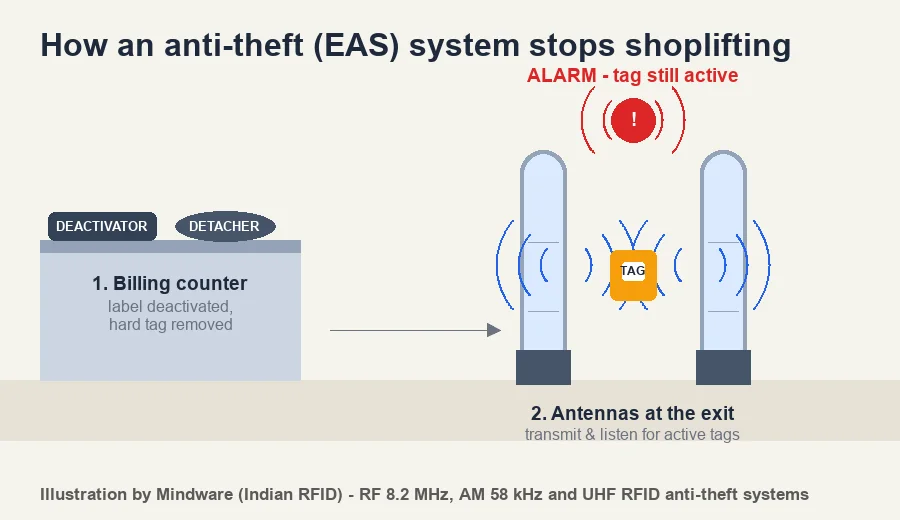
- Tag the item - a re-usable hard tag (clothing, shoes, bags) or a sticky soft label (packaged goods, cosmetics, books).
- At billing - the cashier passes the soft label over the deactivator and removes the hard tag with the magnetic detacher.
- At the exit - the antennas (pedestals) send a signal and listen for a reply. A paid item gives no reply; an unpaid item with an active tag replies and the alarm (sound + light) goes off.
Visible antennas and tags also deter theft - most shoplifters avoid stores where they can see the system.
2. Antennas, hard tags, soft labels, detacher and deactivator
| Part | What it does | Types |
|---|---|---|
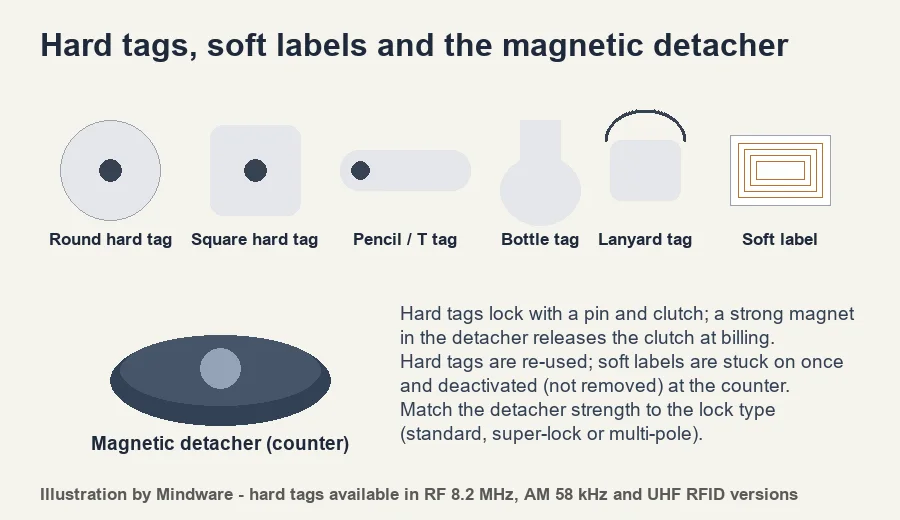
| Antennas (pedestals / gates) | Placed at the exit; send and receive the signal and raise the alarm | Acrylic or metal pedestals; single, double or multi-aisle (master + slave); some AM models also warn of foil-lined bags |
| Hard tags | Re-usable plastic tags locked to the item with a pin and clutch | Round, square, pencil / T, mini, bottle tags, lanyard and spider-wrap tags, ink tags |
| Soft labels | Thin sticky labels, used once and left on the product | RF paper labels (plain or barcode), AM strip labels, mini and hidden labels |
| Magnetic detacher | Strong magnet at billing that releases the hard tag's clutch | Standard, super-lock and multi-pole detachers; hand-held key for bottle / lanyard tags |
| Deactivator | Switches off soft labels after payment | RF deactivator pad, AM deactivator pad; can sit under the billing scanner |
Important: RF and AM parts do not mix. RF tags work only with RF antennas and RF deactivators; AM tags only with AM antennas and AM deactivators. Decide the technology first, then buy tags to match.
3. RF anti-theft technology (8.2 MHz)
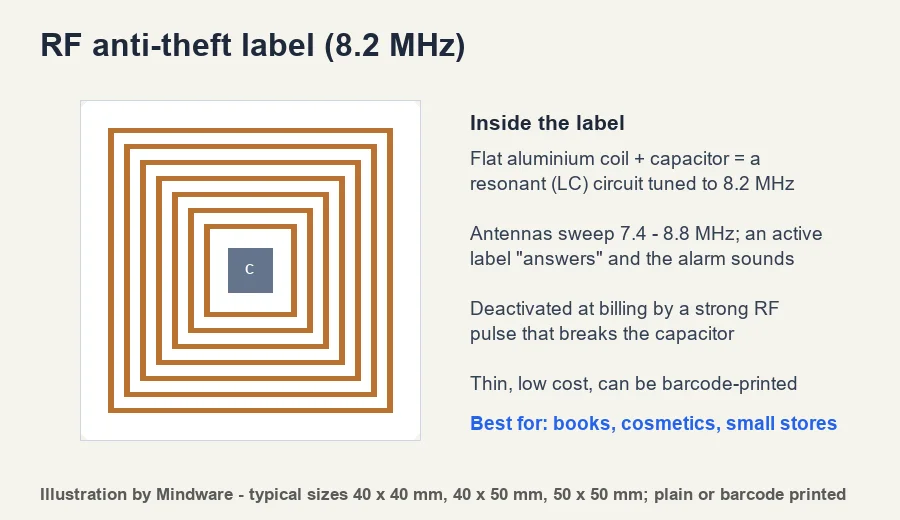
RF (radio frequency) is the most widely used low-cost anti-theft technology. The label is a flat aluminium coil with a capacitor, tuned to 8.2 MHz. The antennas sweep around that frequency; an active label resonates and the system raises the alarm. The deactivator sends a strong pulse that breaks the capacitor, so a paid label stays "dead".
- Strengths: low label and system cost, thin flexible paper labels that can carry a barcode or price, easy to apply at high speed.
- Limits: weaker near metal, foil and liquids; narrower exits; more affected by electronic noise (LED drivers, motors, billing machines); easier to shield with foil-lined bags.
4. AM anti-theft technology (58 kHz)
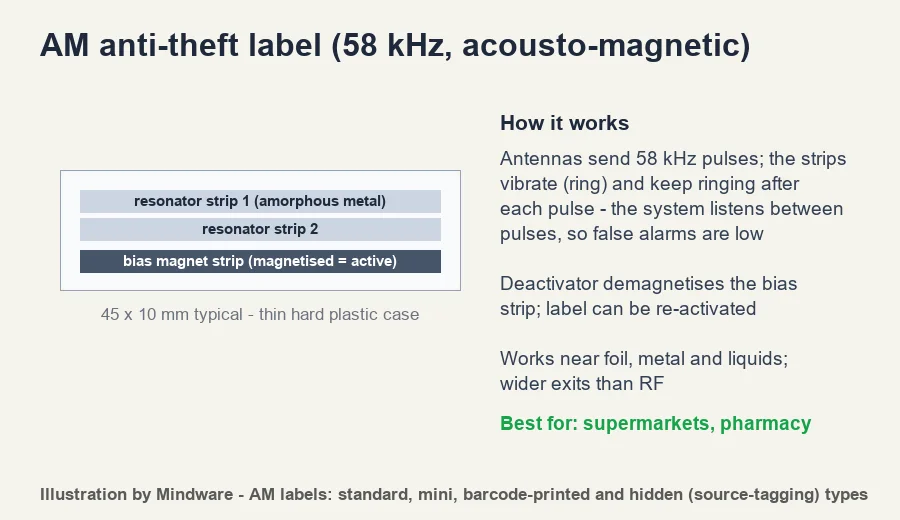
AM (acousto-magnetic) systems send short pulses at 58 kHz. Thin amorphous-metal strips inside the label vibrate and keep "ringing" after each pulse; the antennas listen in the gap between pulses, which makes AM very resistant to false alarms. The deactivator demagnetises the bias strip so the label no longer rings (it can be re-activated if the item is returned).
- Strengths: works near metal, foil and liquids, wider exits, fewer false alarms, harder to defeat with foil bags.
- Limits: labels and antennas cost more; labels are rigid strips rather than flat paper.
5. Difference between RF and AM technology
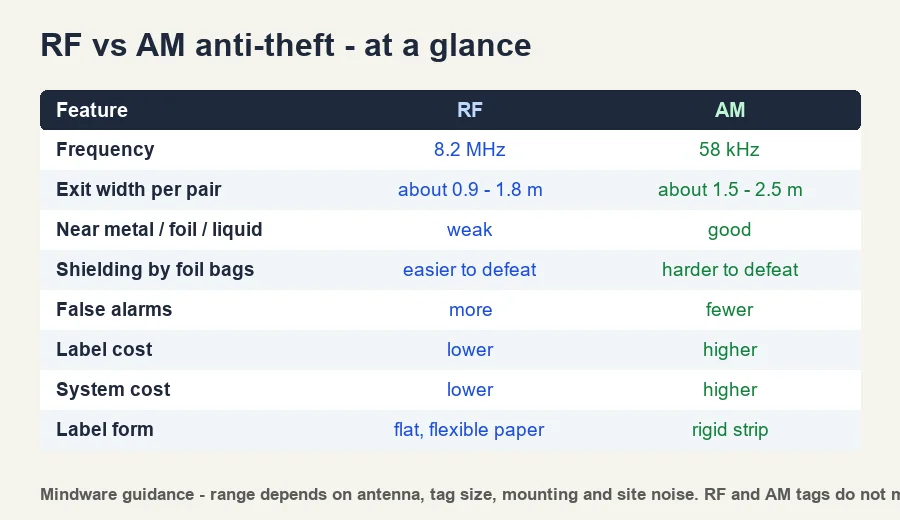
| Feature | RF (8.2 MHz) | AM (58 kHz) |
|---|---|---|
| How it detects | Tuned coil + capacitor resonates | Metal strips vibrate and keep ringing after each pulse |
| Typical exit width per antenna pair | About 0.9 - 1.8 m | About 1.5 - 2.5 m |
| Near metal, foil, liquids | Weak | Good |
| False alarms | More (sensitive to electrical noise) | Fewer |
| Defeat by foil-lined bags | Easier | Harder |
| Soft label | Flat paper, can be barcode-printed, lowest cost | Rigid strip, higher cost |
| Deactivation | RF pulse breaks the capacitor (permanent) | Bias strip demagnetised (can be re-activated) |
| System cost | Lower | Higher |
Ranges are typical; the real figure depends on the antenna model, tag size, mounting and electrical noise at the site. Ask us for a site check before you buy.
6. Which one should be used where
| Store / product | Recommended | Why |
|---|---|---|
| Supermarket, hypermarket, grocery | AM | Foil, cans and liquids; wide entrances; low false alarms |
| Pharmacy, chemist | AM | Blister packs and foil; small AM labels |
| Electronics, mobiles, accessories | AM (spider wraps, hard tags) | Metal products and packaging |
| Liquor, wine, perfume | AM bottle tags / labels | Glass and liquid; bottle-neck tags |
| Clothing, footwear, bags (small / mid store) | RF or AM hard tags | Re-usable hard tags; RF is economical for narrow doors |
| Apparel chains, large fashion stores | UHF RFID (or AM) | Security plus fast, accurate stock counts |
| Books, stationery, cosmetics, gifts | RF labels | Flat paper labels, low cost, barcode on the same label |
| Jewellery, watches, optical | EAS jewellery tags or RFID jewellery tags | Small tags; RFID also speeds daily stock audits |
| Mall / wide shop front | AM (multi-aisle) | Wider coverage per pair of antennas |
| Low budget, narrow door | RF | Lowest total cost |
Rule of thumb: lots of metal, foil or liquid, or a wide entrance - choose AM. Paper-packed or soft goods, narrow door, tight budget - RF is fine. Want to know what left and count stock in minutes - go RFID.
7. Anti-theft (EAS) vs UHF RFID - the difference
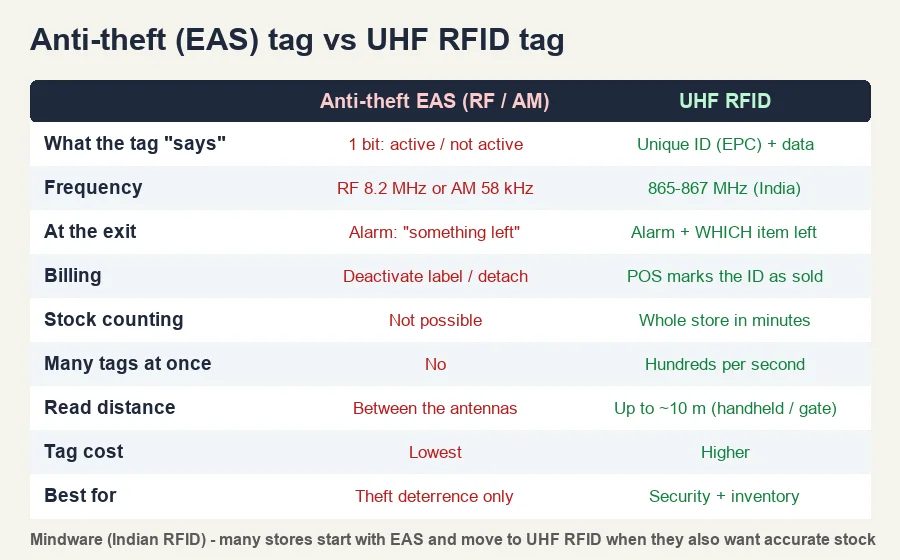
People often ask whether an "anti-theft tag" and an "RFID tag" are the same thing. They are not. An anti-theft (EAS) tag - RF 8.2 MHz or AM 58 kHz - carries only one bit: it is either active or not. A UHF RFID tag carries a unique ID (EPC) for every single item, so the system knows exactly what each tag is.
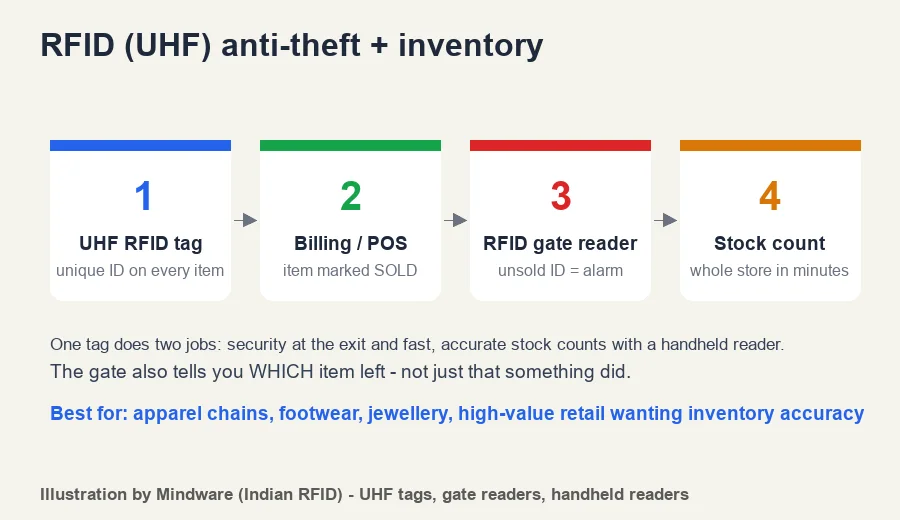
With UHF RFID (EPC Gen2, 865-867 MHz in India) every item carries a tag with a unique ID. At billing the POS marks that ID as sold; the RFID gate at the exit checks each ID that passes and alarms only for unsold items - and records which item it was. The same tags let staff count the whole store with a handheld RFID reader in minutes.
| Anti-theft EAS (RF / AM) | UHF RFID | |
|---|---|---|
| What the tag holds | 1 bit - active or not active | Unique ID (EPC) for each item, plus optional user data |
| Frequency | RF 8.2 MHz or AM 58 kHz | 865-867 MHz in India (EPC Gen2 / ISO 18000-63) |
| At the exit | Alarm - something left | Alarm - and exactly which item left, with time |
| At billing | Soft label deactivated, hard tag detached | POS marks that ID as sold (tag can stay on) |
| Stock counting | Not possible | Whole store in minutes with a handheld reader |
| Reading many tags | No - only detects presence | Hundreds of tags per second |
| Read distance | Only between the exit antennas | Up to about 10 m with handhelds, gates and overhead readers |
| Tag cost | Lowest | Higher |
| Set-up | Simple - antennas, tags, detacher, deactivator | Needs software / POS link and reader tuning |
| Best for | Stopping theft at low cost | Stopping theft and accurate inventory, returns, omni-channel |
Which to choose? Want only to stop theft at the lowest cost - EAS (AM or RF). Want to stop theft and also know your stock, item by item - UHF RFID. Some stores use both: RFID for inventory and EAS for the exit alarm. Learn more about LF, HF and UHF RFID with practical examples.
See also: RFID hard tags · fixed RFID readers · RFID for retail & apparel
8. Stop-shoplifting checklist
- Tag every high-risk item - small, costly, easy-to-hide products first; tag in the same place on every item so cashiers never miss one.
- Install antennas at every exit, including the staff door, close to the door and away from metal shutters, motors and LED drivers.
- Keep the detacher fixed and out of reach of customers, and train every cashier to deactivate and detach on every bill.
- Respond to every alarm politely - a system that is ignored stops working as a deterrent.
- Use hidden labels inside packaging for premium items, and bottle or spider-wrap tags for odd shapes.
- Combine with CCTV and a clear layout - no blind corners, and costly items near the counter.
- Test the system weekly with a sample tag and check the alarm log.
9. Anti-theft products we supply
Antennas, hard tags, soft labels, detachers and deactivators in RF, AM and RFID - with spares and back-end support. Click a product for details and price.
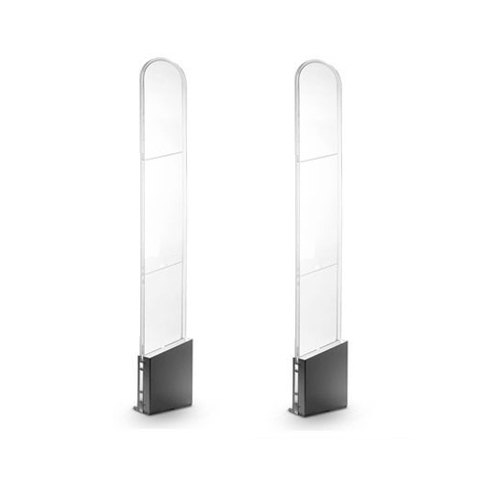 EAS AM AntennaAM 58 kHz
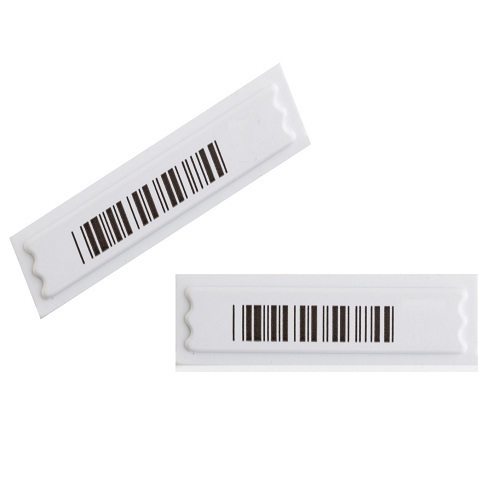 EAS AM LabelsAM 58 kHz
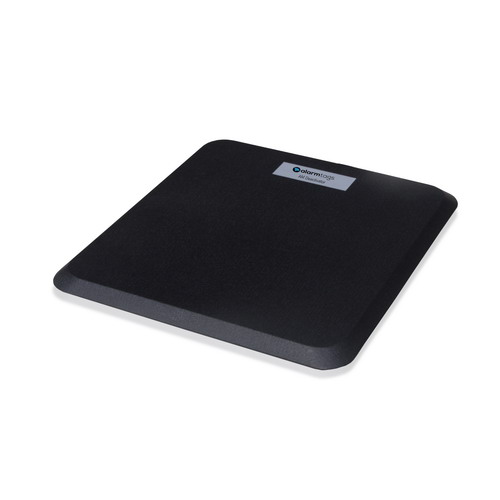 EAS AM Label DeactivatorAM 58 kHz
 EAS RF LabelsRF 8.2 MHz
 EAS RF Soft TagsRF 8.2 MHz
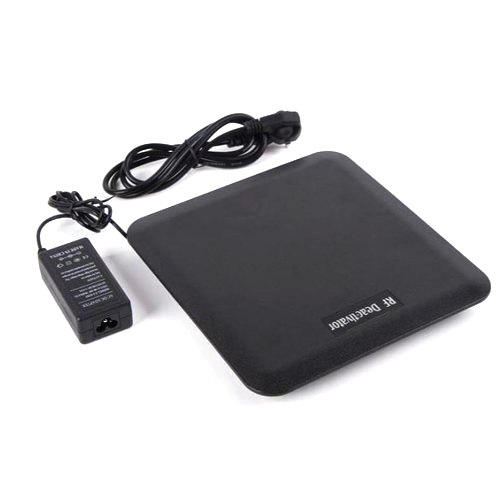 EAS RF Label DeactivatorRF 8.2 MHz
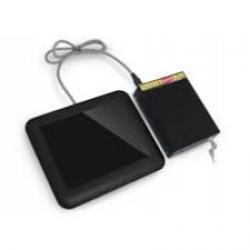 RF06 RF Label DeactivatorRF 8.2 MHz
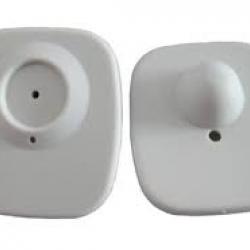 Square Hard TagRF / AM
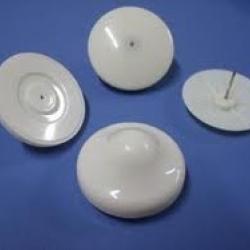 Round Hard TagsRF / AM
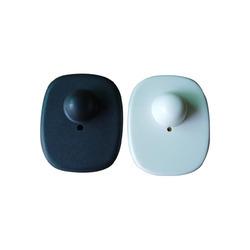 EAS T Hard TagsRF / AM
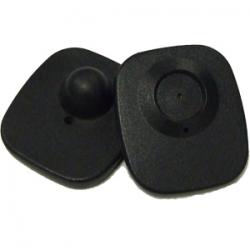 RF Re usable Sqare Hard TagsRF 8.2 MHz
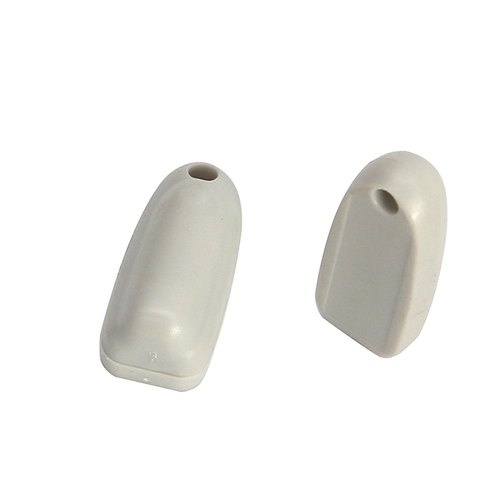 EAS Jewellery TagsRF / AM
 DO 0005 DetacherDetacher
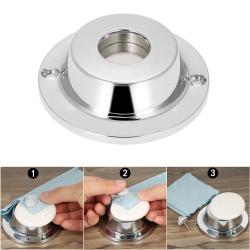 MD 005 RF Hard Tag DetacherDetacher
 Optical Tag DetacherDetacher
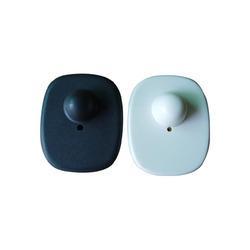 Mindware RFID Hard TagsUHF RFID
All products: anti-theft systems catalogue.
Frequently asked questions
What is the difference between RF and AM anti-theft systems?
RF (radio frequency) systems work at 8.2 MHz with a flat coil-and-capacitor label; they are lower in cost but are affected by metal, foil and electronic noise, and cover narrower exits. AM (acousto-magnetic) systems work at 58 kHz with a strip that vibrates; they cost more but work near metal, foil and liquids, cover wider exits and give fewer false alarms.
Can I use RF tags with an AM antenna?
No. RF tags only work with RF antennas and AM tags only with AM antennas. Hard tags, labels and deactivators must all match the system technology.
Which is better for a supermarket - RF or AM?
AM is usually the better choice for supermarkets and pharmacies because many products have foil, metal or liquid content and entrances are wide. RF suits smaller stores with narrow doors and products like books, cosmetics and clothing.
What is a magnetic detacher?
A detacher is a strong magnet at the billing counter that releases the locking clutch of a hard tag so the pin can be pulled out. Standard, super-lock and multi-pole hard tags need a detacher of matching strength.
What is a deactivator?
A deactivator pad at the billing counter switches off soft labels after payment - RF labels by a strong RF pulse, AM labels by demagnetising the bias strip - so the customer can walk out without an alarm. Hard tags are not deactivated; they are removed with the detacher.
What is the difference between an anti-theft tag and a UHF RFID tag?
An anti-theft (EAS) tag works at RF 8.2 MHz or AM 58 kHz and only tells the exit antennas that an unpaid item is passing. A UHF RFID tag works at 865-867 MHz in India and carries a unique ID for each item, so the gate knows exactly which item left and the same tags are used for fast stock counts.
Is RFID better than EAS for anti-theft?
RFID gives each item a unique ID, so the gate knows exactly which item left and the same tag is used for fast stock counts. It costs more per tag and needs careful set-up. Many stores start with AM or RF EAS and move to RFID when they want item-level inventory as well.