RFID Applications by Industry
RFID is used wherever an organisation needs to know what it has, where it is and what happened to it, without scanning items one by one. This chapter walks through sixteen industries and, for each, explains the business problem, how RFID solves it, the tags and readers usually involved and the benefits you can realistically expect.
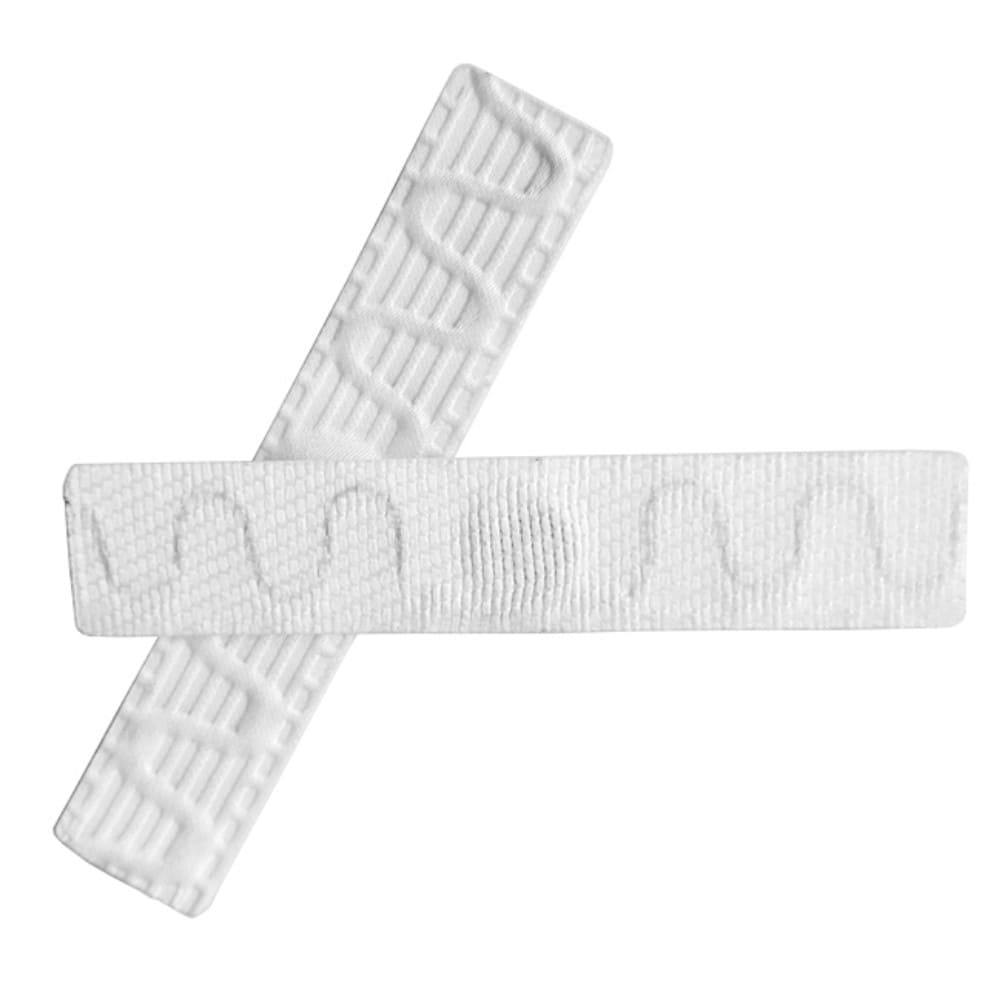
- RFID pays off where many items must be identified quickly, repeatedly or without line of sight.
- UHF (RAIN RFID) dominates supply chain, retail, toll and asset tracking; HF/NFC suits libraries, access and short-range, card-style uses; LF suits animals and some harsh, metal-rich settings.
- Every application has its own physical challenge - metal, liquids, heat, washing, density - so tag choice always follows the environment.
- In India, FASTag on national highways is the largest everyday example of passive UHF RFID.
- The value comes from changed processes and trustworthy data, not from the tags themselves.
How to read this chapter
RFID is a general-purpose identification technology, so its applications are almost endless. What links them is a simple pattern: an organisation handles a large number of things (products, cartons, tools, people, vehicles, animals), it needs to know what each thing is, where it is and what happened to it, and doing that manually or with barcodes is too slow, too error-prone or simply impossible because the item cannot be seen.
For each industry below we cover four things: the problem, how RFID solves it, the typical tags and readers, and the benefits. If any term is new, the earlier chapters on how RFID works and RFID frequencies explain the basics.
| Industry | Main frequency | Typical tag | Primary value |
|---|---|---|---|
| Retail and apparel | UHF | Paper or fabric labels, swing tickets | Inventory accuracy, sales availability |
| Warehouse and logistics | UHF | Carton and pallet labels, reusable tags | Receiving and dispatch speed |
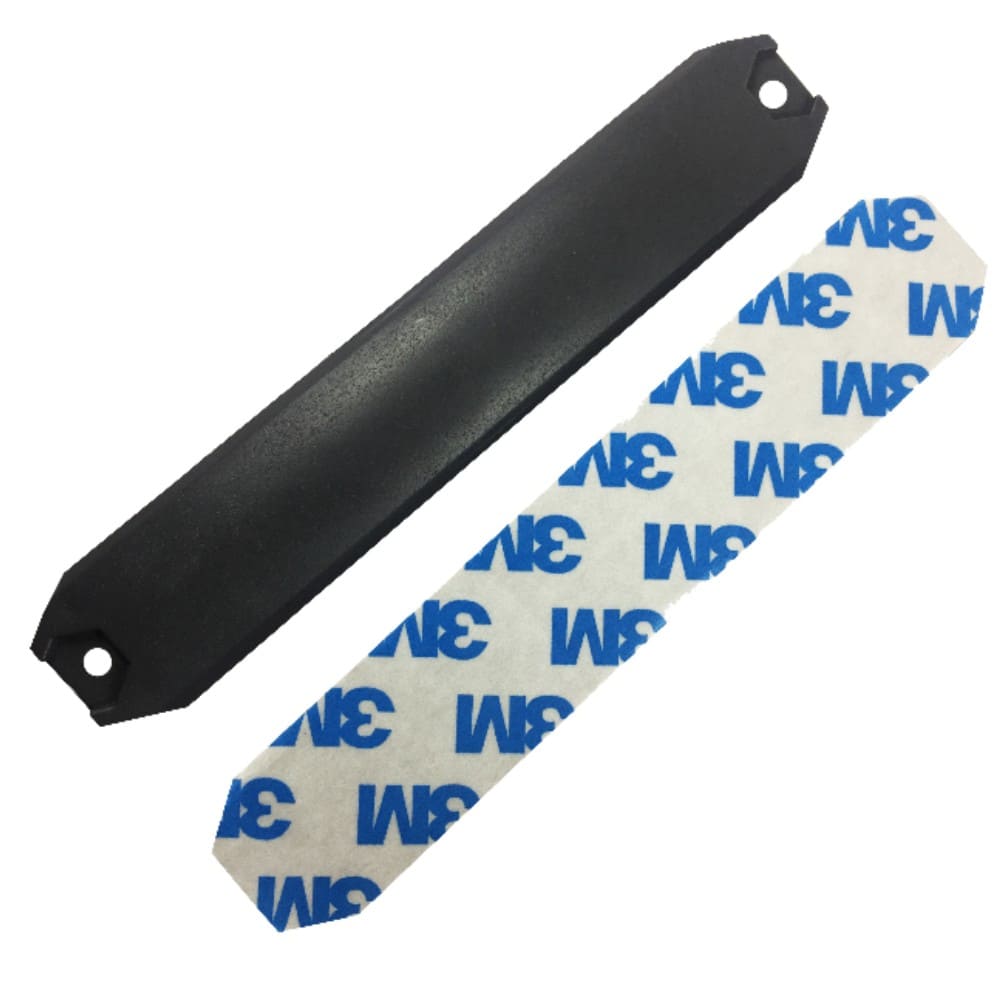
| Manufacturing | UHF, sometimes HF | Rugged, on-metal and high-temperature tags | WIP visibility, tool control |
| Healthcare | UHF and HF | On-metal asset tags, specimen labels, wristbands | Asset utilisation, patient safety |
| Libraries | HF (some UHF) | Book labels, disc tags | Self-service, stock checks |
| Jewellery | UHF | Small tag-and-loop or jewellery tickets | Fast daily stock audits |
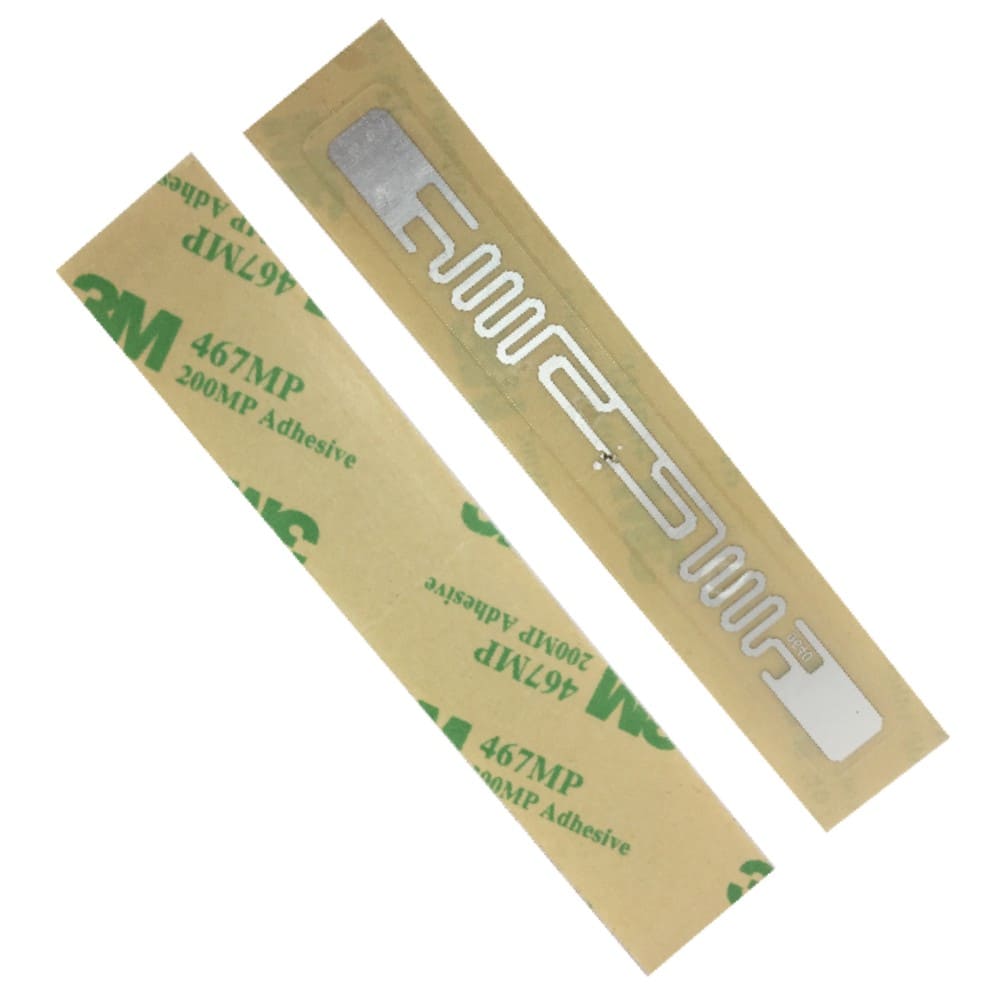
| Vehicles and toll | UHF | Windscreen stickers (FASTag), headlamp tags | Non-stop tolling, parking access |
| Animals | LF 134.2 kHz | Ear tags, glass implants, boluses | Identity, health records |
| Laundry and textiles | UHF (some HF) | Washable laundry tags | Linen counts, loss control |
Retail, warehousing and logistics
Retail and apparel
Problem: A typical fashion store carries thousands of SKUs in many sizes and colours. Manual counts are slow and infrequent, so the system says an item is in stock when it is actually missing, misplaced in the backroom or stolen. Customers leave because their size is "not available" even when it is somewhere in the building.
How RFID solves it: Each garment carries a UHF RFID label or swing ticket, often applied at the factory (source tagging). Staff walk the store with a handheld reader and count thousands of items in minutes, so counts can happen weekly or even daily. The same tags can drive RFID-based EAS (anti-theft gates at the exit that alarm only for unsold items), fitting-room insights, and self-checkout where all items placed in a reading bin or on a counter are read at once.
Typical tags and readers: Paper UHF RFID labels and printed tickets, handheld readers for cycle counts, desktop readers at POS and exit gates.
Benefits: Much higher inventory accuracy, faster replenishment of the shop floor, omnichannel fulfilment (ship-from-store, click-and-collect) based on stock the system can actually trust, and faster receiving of cartons from the distribution centre.
Warehouse and logistics
Problem: Receiving and dispatch are checked by scanning barcodes carton by carton. This creates queues at dock doors, mis-shipments and disputes with customers and transporters about what was actually loaded.
How RFID solves it: Cartons or pallets carry UHF labels. A dock-door portal (a fixed reader with antennas on both sides of the door) reads every tag as the forklift passes, compares it with the advance shipping notice or pick list, and signals pass or fail with a stack light. Reusable tags on pallets, crates and roll cages track returnable transport items that are otherwise lost in the network.
Typical tags and readers: Carton and pallet labels encoded with GS1 SSCC or SGTIN identifiers, rugged reusable tags on returnable assets, fixed readers with antennas at doors and conveyors, handhelds for exceptions.
Benefits: Faster turnaround at the dock, proof of dispatch, fewer short-shipment claims and a running record of where returnable assets are.
In the real world
Manufacturing and healthcare
Manufacturing: work-in-progress and tools
Problem: Factories lose time searching for jobs, fixtures, moulds and tools; WIP status is updated late or by hand; and quality traceability (which batch, which machine, which operator) depends on paper travellers.
How RFID solves it: A tag on each bin, carrier, jig or part is read at workstations and process gates, so the MES knows exactly where each job is and what has been done to it. Tool cribs use RFID to issue and return tools against the employee badge, and moulds and dies carry tags recording their shot counts or maintenance history.
Typical tags and readers: On-metal hard tags, high-temperature tags for paint shops and ovens, fixed readers at stations, sometimes HF for very short, precise reads.
Benefits: Real-time WIP visibility, fewer lost tools, error-proofing (the wrong part cannot be fitted without the system flagging it) and an automatic genealogy record for quality audits.
Healthcare and pharma
Problem: Hospitals own expensive mobile equipment (infusion pumps, wheelchairs, monitors) that staff cannot find when needed. Specimens can be mislabelled or lost, and high-value consumables such as implants and stents expire on the shelf.
How RFID solves it: Asset tracking uses tags on equipment and readers at zone boundaries or handheld audits; some hospitals add active RFID or BLE for room-level real-time location. Specimen tracking puts tags on tubes and racks so whole racks can be verified at once. Smart cabinets for consumables and drugs read their contents automatically and record who took what. Patient wristbands with HF or UHF chips support positive patient identification at the bedside.
Typical tags and readers: On-metal and autoclave-resistant tags, small vial and tube labels, wristbands, RFID-enabled cabinets and handhelds.
Benefits: Less time searching, fewer duplicate equipment purchases, expiry control and better patient safety. In pharma, RFID can complement serialised 2D barcodes for distribution and cold-chain visibility, but always check what the applicable regulation actually mandates.
Libraries, jewellery and events
Libraries
Problem: Issue, return and shelf-checking with barcodes is slow, and misplaced books are effectively lost.
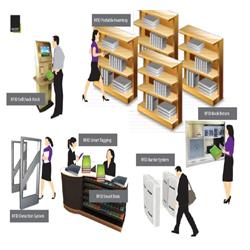
How RFID solves it: Each book carries an RFID label. Members can issue a stack of books at a self-service kiosk in one go, returns can be automated through a book drop, security gates detect unissued items, and staff can run a handheld wand along shelves to find misplaced titles.
Typical tags and readers: Traditionally HF labels to ISO/IEC 15693, although UHF is increasingly used; kiosks, staff stations, gates and shelf readers.
Benefits: Staff time moves from the counter to helping readers, stock checks that used to take weeks take days, and losses fall.
Jewellery stock audits
Problem: Jewellery showrooms count their entire stock every day, often twice, because every piece is small and valuable. Done by hand, this takes hours and still leaves room for error.
How RFID solves it: Each piece carries a small UHF tag on its price ticket. Trays are read in seconds on a counting table, or the whole showroom is audited with a handheld. Missing items are identified by ID, not just by a count mismatch, and the same tag speeds up billing and stock transfer between branches.
Typical tags and readers: Miniature UHF jewellery tags, tray or table readers, handhelds, sometimes exit gates.
Benefits: A full audit in minutes rather than hours, exact identification of what is missing, and better control during exhibitions and branch transfers.
Events and access control
Problem: Paper tickets can be forged and shared, queues form at the gate, and organisers cannot see crowd flow in real time.
How RFID solves it: HF/NFC wristbands or cards act as tickets, access credentials and cashless payment tokens. In mass-participation running events, UHF tags on bibs record start and finish times as runners cross mats or overhead antennas. Office and campus access control uses HF cards (ISO/IEC 14443 or 15693) at doors and turnstiles.
Benefits: Faster entry, fewer forgeries, zone-based permissions and accurate attendance data.
Vehicles, toll, parking and aviation
Automotive, toll and FASTag
Problem: Cash toll collection causes long queues, fuel waste and leakage.
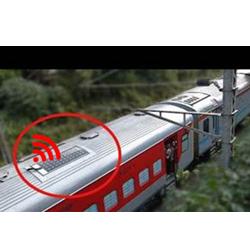
How RFID solves it: India's FASTag is a passive UHF RFID sticker fixed inside the windscreen and linked to a prepaid wallet or bank account. Overhead readers at the toll plaza read the tag as the vehicle approaches and the toll is debited electronically. FASTag became mandatory for four-wheelers on national highways in 2021, which made it one of the largest passive RFID deployments anywhere. Inside vehicle plants, RFID tags on bodies and carriers also track each car through the assembly line.
Parking and gated premises
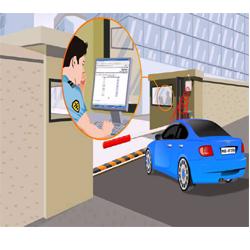
Residential societies, corporate campuses and malls use UHF windscreen tags and long-range readers to open boom barriers automatically for registered vehicles, while visitors still use tickets. The same approach logs fleet vehicles in and out of depots.
Aviation baggage and MRO
Problem: Mishandled bags cost airlines money and goodwill, and aircraft parts need complete maintenance histories.
How RFID solves it: Bag tags with embedded UHF inlays are read at sortation, loading and arrival points far more reliably than barcode scanners, which need the label to face the camera. IATA Resolution 753 requires airlines to track bags at key points of the journey, and RFID is one widely adopted way to do it. In maintenance (MRO), tags on rotable parts, life vests and emergency equipment let technicians check an entire cabin for expired items in minutes and keep part histories on the tag and in the database.
Asset tracking, laundry and livestock
IT and fixed asset tracking
Problem: Finance must verify fixed assets (laptops, servers, furniture, lab equipment) every year, and many organisations find assets on the register that nobody can locate, or assets in the building that are not on the register.
How RFID solves it: Each asset gets a tag, usually an on-metal tag for IT equipment and a standard or anti-tamper label for furniture. An auditor walks each room with a handheld; the software reconciles found, missing and misplaced assets automatically. Fixed readers at exits can raise an alert if tagged equipment leaves without a gate pass.
Benefits: Physical verification in days instead of weeks, a cleaner asset register for audits, and fewer losses.
Laundry and textile rental
Problem: Hotels, hospitals and industrial laundries exchange thousands of sheets, towels and uniforms daily. Counting by hand is slow and disputes over lost linen are common.
How RFID solves it: A flexible, washable laundry tag is sewn or heat-sealed into each item. A whole bag or cart is read in a tunnel or cabinet reader at dispatch and return, and the system counts wash cycles so items can be retired at the end of their life.
Typical tags: Textile UHF laundry tags rated for industrial washing, high temperatures and pressing; a smaller number of systems use HF.
Animal and livestock identification
Livestock, pets and laboratory animals are identified with LF RFID at 134.2 kHz under ISO 11784 and ISO 11785, using ear tags, injectable glass transponders or rumen boluses. The tag links the animal to its health, vaccination, breeding and ownership records, and automated feeders and milking systems use it to recognise each animal. LF is chosen because it reads reliably through tissue and moisture at short range.
Solar, defence, mining and smart cities
Solar PV module traceability
Solar panels are expected to last 25 years or more, and buyers want to verify each module's manufacturer, cell origin, production date and test results throughout that life. Many module specifications, including Indian tenders for government-supported projects, have called for an RFID tag laminated inside each module so its data can be read even after the outer label fades. Because the tag sits behind glass in a module with a metal frame, tag placement and testing are critical. Always confirm the exact requirement in the current tender document.
Defence and government
Defence logistics agencies use RFID to track consignments, spares and weapons in armouries, where knowing exactly which serialised item is where is a security requirement. Government departments use it for records rooms, file tracking, vehicle fleets, evidence rooms and asset verification. These projects usually demand rugged tags, offline-capable handhelds and strict data security.
Mining and construction
Underground mines use active RFID or similar real-time location technologies to know which workers are in which zone, which is vital in an emergency. Construction companies tag tools, scaffolding, formwork and equipment to control losses across scattered sites, and tag precast concrete elements to record casting date and installation location.
Smart cities
Municipal bodies use RFID tags on waste bins and on households to verify door-to-door collection, tags on vehicles for access and fleet management, and library, parking and transit systems built on the same technology. The common theme is proving that a service actually happened at a given place and time.
What successful applications have in common
Looking across all sixteen industries, the projects that succeed share a few traits:
- A clear, measurable problem. "Cut the stock count from eight hours to thirty minutes" beats "use RFID for inventory".
- The right tag for the physics. Metal, liquids, heat, washing and tag density decide the tag, not the catalogue price. See types of RFID tags.
- Process change. The benefit appears only when people stop doing the old manual step and trust the RFID data.
- Integration. Reads must update the ERP, WMS, MES or library system; otherwise RFID becomes an isolated gadget.
- A pilot before rollout. Real items, real staff and real conditions expose problems cheaply.
Watch & learn
Videos are from YouTube and their respective creators; they play only when you click.
Help India adopt this fast-growing technology - teach, consult or build projects with Indian RFID.
Frequently asked questions
Which industry uses RFID the most?
By tag volume, retail and apparel are among the largest users of passive UHF RFID labels worldwide, followed by logistics and supply chain. By visibility to the public in India, FASTag vehicle tolling is the best-known application.
Can RFID work on metal assets like tools and servers?
Yes, but only with on-metal tags designed for it. Standard paper labels detune on metal and may not read at all, so on-metal hard tags or flexible on-metal labels are used for IT, tools and machinery.
Is FASTag an RFID tag?
Yes. FASTag is a passive UHF RFID sticker on the vehicle windscreen that is read by overhead readers at toll plazas, with the toll debited from a linked prepaid wallet or bank account.
What frequency is used for animal RFID tags?
Animal identification uses low frequency RFID at 134.2 kHz under ISO 11784 and ISO 11785, in the form of ear tags, injectable glass transponders and boluses.
Does RFID replace the barcode in these applications?
Usually not. Most deployments print a human-readable code and a barcode on the same RFID label, so the barcode remains a fallback and works with partners who do not have RFID readers.
Join the 1-month Certified RFID Specialist Program - live online. New batch 12 January 2027.