Who Invented RFID? The History and the Father of RFID
RFID was not invented in one day by one person. It grew from radar and wartime identification, a 1948 theory of reflected power, a Soviet listening device, and a series of patents in the 1970s. This chapter tells the story - and explains why Mario Cardullo and Charles Walton are both called the "father of RFID".
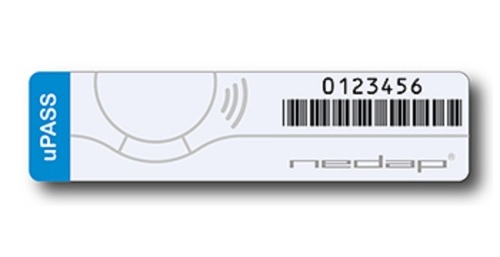
- RFID has no single inventor: it grew from radar, wartime IFF transponders and the idea of communicating by reflected radio waves.
- Harry Stockman's 1948 paper "Communication by Means of Reflected Power" laid the theory for passive backscatter tags.
- Mario W. Cardullo received a US patent in January 1973 for a passive radio transponder with rewritable memory - the first true RFID tag - and is widely called the father of RFID.
- Charles Walton patented radio-frequency identifiers from the 1970s, including a 1983 patent used for keyless door entry, and is also remembered as a father of RFID.
- The MIT Auto-ID Center (1999) created the Electronic Product Code, leading to the EPC Gen2 standard in 2004 and today's RAIN RFID.
The short answer
RFID was not invented by one person in one moment. It was built up over about thirty years, from radar in the 1930s and 1940s to the first patented RFID tags in the early 1970s. Two inventors are most often called the father of RFID:
- Mario W. Cardullo - received a US patent in January 1973 for a passive radio transponder with rewritable memory. This is generally recognised as the first true RFID tag, and Cardullo is the name most often given as the inventor of RFID.
- Charles Walton - an engineer who held a long series of RFID patents from the 1970s onward, including a 1983 patent for a portable radio-frequency identifier used for keyless door entry. Licensing these patents to lock and access-control companies made RFID commercial, and he is widely remembered as a father of RFID.
Behind them stand the radar pioneers, a scientist who described communication by reflected radio waves, and many teams in government labs and companies. Here is the full story.
1930s-1940s: radar and Identification Friend or Foe
Radar, developed in several countries in the 1930s and led in Britain by Sir Robert Watson-Watt, could show an approaching aircraft but not whose aircraft it was. The answer was IFF (Identification Friend or Foe): a transponder on friendly aircraft that replied when it received a radar signal. IFF transponders had their own power, but the principle - interrogate, then identify from the reply - is exactly what every RFID reader does today.
In the real world
1945: Theremin's "Thing"
In 1945, Soviet inventor Leon Theremin designed a listening device hidden inside a carved wooden Great Seal presented to the US ambassador in Moscow. It had no battery: a cavity and antenna were "lit up" by a radio beam from outside, and sound vibrations modulated the reflected signal. It was a microphone, not an identification tag, but it is often cited as the first passive device powered and read by an external radio signal - a direct ancestor of the passive RFID tag.
1948: Harry Stockman and reflected power
In October 1948, Harry Stockman published "Communication by Means of Reflected Power". He showed that information could be sent by changing how an object reflects a radio wave, instead of transmitting a new signal. This is the theory of backscatter, which every passive UHF tag - including FASTag - uses today. Stockman also noted that much work remained before the idea could be used in practice; it would take about twenty-five years.
1950s-1960s: experiments and anti-theft tags
Through the 1950s and 1960s engineers explored long-range transponders and radio identification. The first mass-market product appeared in shops: electronic article surveillance (EAS), the anti-theft tags that sound an alarm at the door. These were "1-bit" tags - they could only say "I am here", not who they were - but they put radio tags on millions of products.
1970s: the first true RFID tags
- 1973 - Mario W. Cardullo is granted a US patent for an active and passive radio transponder with memory that could be rewritten. His proposals included toll collection, vehicle identification, banking and security - uses that all came true.
- 1973 - Charles Walton receives the first of his patents for a passive transponder used to unlock a door without a key. His later patents, including the 1983 "portable radio frequency emitting identifier", were licensed widely in access control.
- 1970s - Los Alamos National Laboratory in the USA demonstrates passive tags read by modulated backscatter, for tracking livestock and vehicles. The researchers later formed companies that built early electronic toll systems.
1980s-1990s: tolls, animals and access cards
Low-frequency tags became standard for animal identification, and electronic toll collection spread in the USA and Europe. HF (13.56 MHz) smart cards brought contactless access control, transport tickets and payments. In the 1990s, standards such as ISO/IEC 14443 and 15693 made cards from different makers work together.
1999-2004: the Electronic Product Code
In 1999 the Auto-ID Center was founded at the Massachusetts Institute of Technology (MIT), with researchers including Kevin Ashton, Sanjay Sarma and David Brock. Their idea: give every single item a unique number - the Electronic Product Code (EPC) - and use cheap passive UHF tags to read it. Ashton described this world as the "Internet of Things", a phrase that became the name of a whole industry. The work moved to EPCglobal (part of GS1), and in 2004 the EPC Gen2 UHF standard was ratified, later adopted as ISO/IEC 18000-63. Read more in GS1 and RFID.
2010s-today: RAIN RFID and India
Passive UHF RFID is now known as RAIN RFID, and billions of tags are used every year in apparel, retail, logistics, healthcare, aviation and manufacturing. In India, FASTag - a passive UHF RFID windscreen tag - became mandatory for vehicles at national highway toll plazas in February 2021, making RFID part of daily life for millions of people. Jewellery stores, warehouses, factories and exporters across India now use RFID for stock control and traceability.
RFID timeline at a glance
| Year | Milestone |
|---|---|
| 1930s-1940s | Radar and IFF transponders identify friendly aircraft |
| 1945 | Leon Theremin's passive listening device ("The Thing") |
| 1948 | Harry Stockman: "Communication by Means of Reflected Power" |
| 1960s | Electronic article surveillance (1-bit anti-theft tags) |
| 1973 | Mario Cardullo's patent for a rewritable passive transponder; Charles Walton's first door-entry transponder patent |
| 1970s | Los Alamos demonstrates passive backscatter tags |
| 1980s-1990s | Animal ID, toll collection, HF smart cards and ISO standards |
| 1999 | MIT Auto-ID Center; EPC; "Internet of Things" |
| 2004 | EPC Gen2 UHF standard ratified |
| 2014 | RAIN RFID Alliance formed to promote passive UHF RFID |
| 2021 | FASTag mandatory on Indian national highways |
Help India adopt this fast-growing technology - teach, consult or build projects with Indian RFID.
Frequently asked questions
Who invented RFID?
No single person invented RFID. It developed from radar and IFF in the 1940s, Harry Stockman's 1948 work on reflected power, and 1970s patents. Mario W. Cardullo is usually credited with the first true RFID tag - a passive transponder with memory, patented in 1973.
Who is the father of RFID?
Mario W. Cardullo is most often called the father of RFID for his 1973 patent on a passive, read-write radio transponder. Charles Walton, who held many RFID patents including a 1983 radio-frequency identifier used for keyless entry, is also widely called the father of RFID.
When was RFID invented?
The ideas date from the 1940s, but the first patent for a true RFID tag with rewritable memory was granted to Mario Cardullo in January 1973. The same year, Los Alamos researchers demonstrated passive backscatter tags.
What was the first use of RFID?
The forerunner was IFF (Identification Friend or Foe) on Second World War aircraft. The first mass commercial use was electronic article surveillance (anti-theft) tags in shops in the 1960s and 1970s.
Who coined the term Internet of Things?
Kevin Ashton, co-founder of the MIT Auto-ID Center, used the phrase "Internet of Things" in 1999 to describe a world where RFID-tagged objects report their own identity to computers.
Join the 1-month Certified RFID Specialist Program - live online. New batch 12 January 2027.