RFID Timing for Marathons & Races
Chip timing gives every runner an accurate personal time, from city marathons to school sports days. This chapter explains how RFID race timing works, why bib tags are designed the way they are, how to set up mats and readers at an event, and how to fix the problems that cause missed reads.
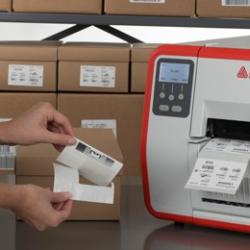
- Most modern races use disposable passive UHF tags on the bib, read by antennas in mats or on overhead and side stands.
- Net (chip) time runs from when a runner crosses the start line to the finish; gun time runs from the start signal.
- Bodies absorb UHF energy, so bib tags use spacers and must be worn flat on the front of the torso.
- Redundancy - backup readers, a second mat line and manual or photo records - is what makes timing trustworthy.
- Timing services are a practical business for organisers and startups who invest in equipment, software and on-site discipline.
What is RFID chip timing?
Before chip timing, finishing times were recorded by people with stopwatches and clipboards, and results took hours to compile. A runner who started at the back of a large crowd could lose minutes just reaching the start line. RFID chip timing changed that. Every participant carries a small tag, and antennas at the start, along the course and at the finish record exactly when each tag crosses. Software turns those reads into individual times, splits and rankings, often published within minutes.
The idea is the same as any RFID system - a tag, a reader with antennas, and software - described in Components of an RFID System. What makes race timing special is the challenge: hundreds or thousands of moving people, close together, each needing to be read reliably within a fraction of a second.
How chip timing works
Bib tags
Most running events today use disposable passive UHF tags (EPC Gen2 / ISO/IEC 18000-63) attached to the back of the race bib. The tag has no battery; it is powered by the reader's signal as the runner passes the antennas. Each tag holds a unique number that the timing software links to the runner's registration. Because the tags are inexpensive, they are simply thrown away with the bib after the race. You can learn more about tag types in Types of RFID Tags.
Shoe and ankle chips
Some events use a tag fixed to the shoe laces or worn on an ankle strap. Ankle straps are common in triathlon, where athletes swim, cycle and run and a bib may not be worn throughout. These chips are often reusable and collected at the finish.
Older and active systems
Early chip timing systems commonly used reusable shoe chips working at low frequency, read by loop antennas in mats; these needed collecting after each race. Active timing systems, using battery-powered transponders, are also used, particularly in motor sport and some cycling events where speeds are high. For mass running events, passive UHF has become the common choice because of cost and convenience.
Mats and antennas
Readers are connected to antennas placed where runners cross a timing line. The two main styles are:
- Timing mats - flat antennas laid across the road, covered by a ruggedised rubber or plastic surface that runners step over.
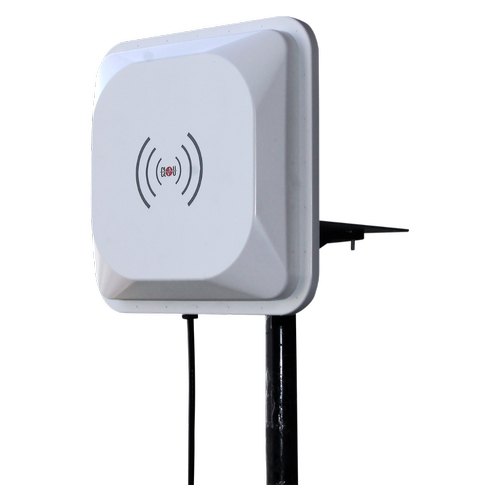
- Overhead and side antennas - panels mounted on a gantry or on stands beside the course, pointed at the runners' torsos. These avoid trip hazards and cable covers on the road.
Readers and antennas at the start, at each split point and at the finish create a series of timing lines. In India, UHF readers must operate in the 865-867 MHz band and within 4 W EIRP (1 W transmitter power), so a timing setup must be configured within those limits.
In the real world
Gun time vs net (chip) time
Gun time is measured from the official start signal to the moment the runner crosses the finish. Net time, also called chip time, is measured from the moment the runner crosses the start line to the finish. In a large race, someone starting at the back may take several minutes to reach the start line, so their net time can be noticeably faster than their gun time.
Many governing body rules use gun time for official placings and prize positions, while net time is shown to every runner as their personal result. Each race should state its rules in advance, and the timing team must record both. A start mat is what makes net time possible; without one, only gun time can be calculated.
Getting reliable reads in crowds
Reading every runner is harder than it looks. Three effects matter most.
Dense tag populations
At the start and in the middle of the pack, dozens of tags may enter the read zone together. EPC Gen2 anti-collision handles many tags, but the reader still needs enough time and signal to read each one. Wider read zones, multiple antennas and well-tuned reader settings help. See RFID Read Range for the factors involved.
Body detuning
The human body contains a lot of water, which absorbs UHF energy and detunes a tag placed directly against it. That is why bib tags are built with a foam spacer or raised design that keeps the antenna a few millimetres away from the body, and why the bib must be worn on the front of the torso, where antennas can see it, rather than on the back where the runner's own body blocks the signal.
Tag orientation
A tag reads best when its antenna faces the reader antenna. A bib worn flat and upright on the chest gives a predictable orientation. A folded, crumpled or sideways bib changes that orientation and weakens the read.
Redundancy, live results and splits
Redundancy
Professional timing teams never rely on a single read point. Common measures include:
- A second, independent mat line or antenna set with its own reader just after the main finish line.
- Battery or UPS backup for readers and laptops.
- A manual backup: volunteers recording bib numbers in finish order, or a video or photo camera covering the finish line with a visible clock.
- Reads stored locally on each reader as well as sent to the timing computer, so a network failure does not lose data.
Live results and updates
Readers send reads to timing software over a local network or mobile data. The software matches tag numbers to registrations, applies the race rules and publishes results to a website, results screens or an app. Many events send SMS or app notifications as runners pass split points, so friends and family can follow progress.
Splits for pacing
Split mats at intermediate points - for example every 5 km - show each runner's pace through the race. Splits also help detect course cutting: a runner who appears at the finish without passing the expected splits can be flagged for review.
Cycling, triathlon, schools and corporate runs
Cycling involves higher speeds, so the read zone must be long enough to capture tags in a shorter time. Tags are usually mounted on the bike frame, fork or helmet, positioned where the antennas can see them.
Triathlon adds transition areas. Ankle chips are common because athletes change gear, and timing lines at the transition entries and exits measure swim, bike and run segments separately.
School sports days and corporate runs are smaller but benefit from the same approach. A single reader, one or two antennas, pre-encoded bib tags and simple software can produce fair, instant results for a few hundred participants. The RFID Applications chapter shows how this fits among other event uses.
Equipment checklist and event setup
Equipment checklist
- UHF bib tags (or ankle/shoe chips), encoded and linked to registrations.
- Fixed RFID readers - one or more per timing line, plus spares.
- Timing mats or RFID antennas on stands or gantries.
- Coaxial and network cables, cable protectors and tape.
- Power: generator or mains with UPS and batteries.
- Timing laptop with software, plus a backup laptop.
- Network: router, mobile data, or point-to-point links for remote splits.
- Start clock, finish clock and a camera for backup.
- Test tags for checking every line.
Step-by-step setup
- Before the event: import registrations, encode or assign tags, print bibs and test a sample of bibs on a person through each antenna setup.
- Arrive early: lay mats or mount antennas square to the course, at the exact measured start, split and finish points.
- Connect and power: connect readers and antennas, start power backup, and synchronise every reader clock to the timing computer.
- Test every line: walk and jog through with test tags worn on the body; confirm reads at all lines and check that the software receives them.
- Record the start: log the exact gun time for each wave; start mats begin recording net time.
- Monitor during the race: watch read counts at each line, compare with the number of starters and fix problems immediately.
- Close and reconcile: merge backup data, resolve missing reads using the secondary line, manual records or video, then publish provisional results and an enquiry window before results are final.
Common problems and fixes
| Problem | Likely cause | Fix |
|---|---|---|
| Missed reads at the finish | Crowded finish, low power, poorly aimed antennas | Widen the read zone, add antennas, second mat line, check reader settings |
| Runner shown as DNF but finished | Missed finish read, or tag not linked to registration | Check backup line, video and manual list; verify tag-to-bib mapping before race |
| Folded or covered bibs | Runner behaviour | Clear instructions at bib collection, announcements at the start |
| Poor reads near metal barriers | Reflections and detuning near steel crowd barriers or gantries | Move antennas or barriers, adjust angles, test with tags on a person |
| Wrong net times | No start read, or reader clocks out of sync | Test the start line, synchronise clocks, use gun time as fallback per rules |
| Duplicate or stray reads | Runners standing near mats, read zone too large | Set minimum time between reads, keep spectators back, tune power |
| Data lost at a remote split | Network failure | Readers store data locally; upload when connection returns |
Results publishing and the Indian market
Results should be published as provisional first, with a clear process for runners to raise queries, then finalised. Standard outputs include overall and category rankings, gun and net times, splits and certificates. Runner data such as names, phone numbers and ages is personal data, so collect only what is needed, publish only what participants have agreed to, and follow India's DPDP Act 2023.
Running has grown considerably in India, and many city marathons, half marathons, charity runs and corporate events now use chip timing as standard. That creates opportunities for event organisers and startups to offer timing as a service. A typical business invests in readers, antennas or mats, tag supply, software and a trained crew, and charges per participant or per event. Success depends less on equipment than on discipline: careful testing, redundancy and accurate, fast results build the reputation that wins repeat events.
If you are planning a timing service, our RFID consulting team can help with equipment selection and testing, and our RFID courses in India provide hands-on training in readers, tags and system setup.
Help India adopt this fast-growing technology - teach, consult or build projects with Indian RFID.
Frequently asked questions
How does chip timing work in a marathon?
Each runner carries an RFID tag, usually on the bib. Antennas in mats or on stands at the start, split points and finish read the tag as the runner crosses, and timing software converts those reads into net times, splits and rankings.
What is the difference between gun time and chip time?
Gun time is measured from the official start signal, so runners at the back include the time taken to reach the start line. Chip or net time starts when the runner actually crosses the start mat. Race rules state which time is used for official placings.
Why should I not fold or cover my race bib?
The tag on the bib needs a clear path to the antennas and a gap from your body. Folding it, pinning it on the back or covering it with a jacket can detune the tag and cause a missed read.
Are bib tags reusable?
Most UHF bib tags are disposable and cheap enough to be printed into every bib. Reusable shoe or ankle chips are still used in some sports, such as triathlon, and must be collected after the event.
Can a school or company run its own chip timing?
Yes. A small UHF timing set with one reader, a pair of antennas or a mat, pre-encoded bib tags and timing software can handle sports days and corporate runs, provided the team tests the setup and keeps a manual backup.
Join the 1-month Certified RFID Specialist Program - live online. New batch 12 January 2027.