How RFID Helps Us Every Day
Most people use RFID or NFC many times a day without noticing. This chapter walks through a typical Indian day - from the office access card and metro ride to FASTag, tap-to-pay and hotel keys - and explains in plain words what is happening technically each time, why it makes life easier, and which privacy fears are real.
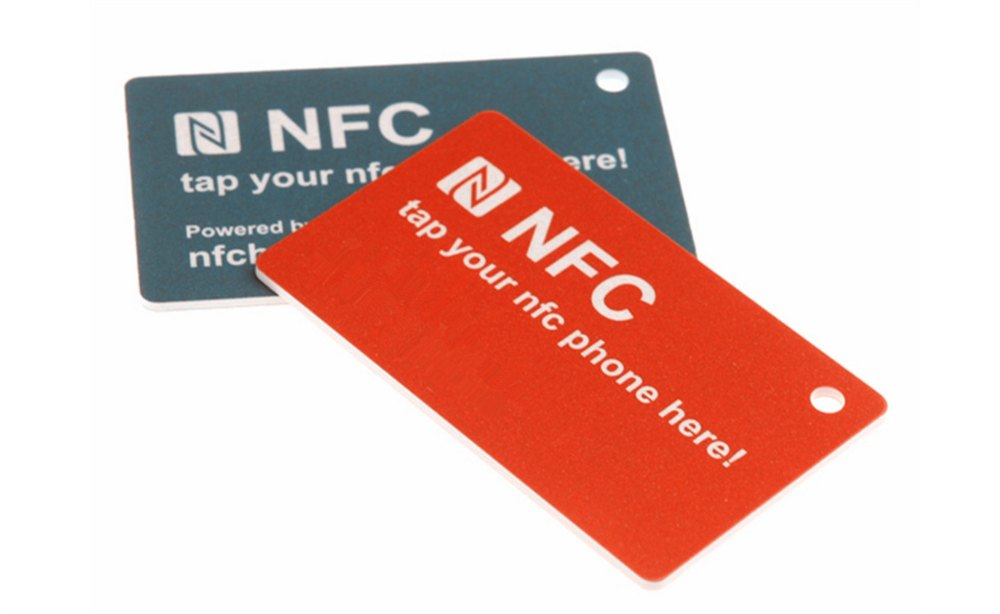
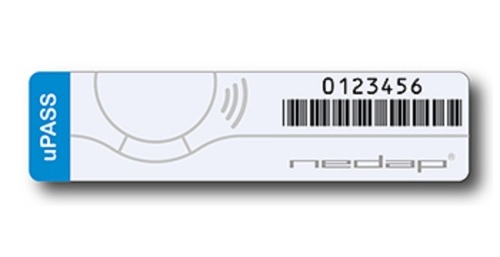
- Office cards, metro cards, tap-to-pay cards, hotel keys and phones mostly use HF 13.56 MHz or NFC, which work only at a few centimetres by design.
- FASTag, clothing price labels, airport bag tags and many warehouse labels use passive UHF RFID, read from roughly one to ten metres.
- Pet microchips and many older access cards use LF (125 or 134.2 kHz), which reads at short range but works well near water and body tissue.
- RFID saves time because nothing has to be lined up, scanned one by one or handed over - a tap or a drive-past is enough.
- Passive tags have no battery and no GPS; they can only be read when a compatible reader is close by.
RFID: the invisible helper in your pocket
If you live in an Indian city, there is a good chance you used radio frequency identification before you finished breakfast. RFID lets an object carry a small chip and antenna that a reader can identify by radio, without a line of sight and without anyone typing a number. A close cousin, NFC (Near Field Communication), is simply a short-range form of HF RFID built into phones and payment cards.
This chapter follows a typical day and, at each stop, explains which frequency band is used and roughly how far it reads. The chapter on RFID frequencies goes deeper; for now, remember three rules of thumb:
- LF (125-134 kHz) - reads at a few centimetres, tolerant of water and body tissue. Used in animal chips and older access cards.
- HF / NFC (13.56 MHz) - reads at about 0-10 cm. Used in cards, tickets, phones and library books, where a deliberate tap is wanted.
- UHF (865-867 MHz in India) - passive tags read at roughly 1-10 m. Used in FASTag, retail labels, bag tags and supply chains, where many items must be read quickly.
Morning: home, office and the commute
Smart home locks and door access
Many apartment buildings and newer flats use a key fob, card or phone to open the main door or a smart lock. The fob is usually an HF 13.56 MHz tag (often a MIFARE-family chip), though older systems use 125 kHz LF fobs. The reader in the lock powers the fob through its antenna field, reads its identifier or a secured data block, and decides whether to release the latch.
School attendance and the school bus
Children in many private schools carry an ID card that they tap on a reader at the gate, and the school app sends parents a message such as "arrived at 7:52". These cards are typically HF or LF proximity cards read at a few centimetres. Some schools fit UHF readers on bus doors so that a card in a bag or lanyard is logged as the child boards, without anyone stopping to tap.
Metro and bus smart cards
Metro systems across India have used contactless smart cards and tokens for years. More recently, the National Common Mobility Card (NCMC) - promoted under the "One Nation One Card" idea - is a contactless debit or prepaid card that is meant to work for metro, bus, parking and retail payments across participating operators. Technically these cards, and the round tokens used by many metros, are HF 13.56 MHz devices based on ISO/IEC 14443. A quick cryptographic exchange takes a fraction of a second, so you tap without stopping.
FASTag on the car
If you drive, the sticker on your windscreen is a passive UHF RFID tag. As the car approaches a toll lane, an overhead or side-mounted reader in the 865-867 MHz band reads the tag identifier from a few metres, the toll system looks up the linked wallet, deducts the toll and lifts the barrier. There is no battery in a FASTag; it is powered entirely by the reader's signal. We cover the system end to end in FASTag and RFID in India.
The office ID card
At work, the badge on your lanyard opens doors, records attendance and may also unlock the printer or pay at the canteen. Office badges are usually HF 13.56 MHz cards (MIFARE Classic, DESFire or similar), though many older buildings still run 125 kHz LF proximity cards.
In the real world
Daytime: shopping, payments and parcels
Tap-to-pay cards and phones
A contactless debit or credit card - look for the four curved lines symbol - contains an HF chip following ISO/IEC 14443 and the payment-network specifications. When you tap, the card generates a one-time cryptogram for that transaction, so the data a terminal receives cannot simply be replayed for another purchase. Phones and watches do the same through NFC using tokenised card details. In India, small contactless payments can be made without entering a PIN up to a limit set by the RBI; above that, the terminal asks for a PIN.
Clothes with RFID price tags
Pick up a shirt in a large fashion chain and look closely at the swing tag or care label: there may be a thin UHF inlay - a tiny chip with an aluminium antenna - inside it. Staff use handheld readers to count hundreds of items a minute. These are passive UHF labels read at about 1-5 m.
Shop anti-theft gates
The gates at a shop exit are not always RFID. Many use older electronic article surveillance (EAS) technologies, such as acousto-magnetic (around 58 kHz) or radio-frequency (around 8.2 MHz) tags, which only signal "a tag is here". A growing number of retailers instead use their UHF RFID item labels at the exit, so the gate can tell which specific item left without being paid for.
Parcels and couriers
Your online order is mostly tracked by barcode, but UHF RFID increasingly appears on roll cages, pallets, sorting bags and returnable crates in courier hubs and warehouses, where readers at dock doors log whole pallets as they pass.
Library books
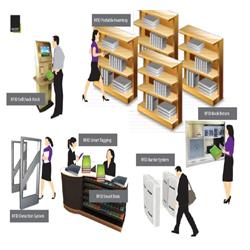
Many university and public libraries put an RFID tag inside every book. At the self-service kiosk you place a pile of books on the pad and they are all issued together; at the exit gate the tag's security status is checked. Library systems have traditionally used HF 13.56 MHz tags (ISO/IEC 15693), which read up to about 30-60 cm with a large antenna, while some newer systems use UHF.
Travel, health and leisure
Hotel key cards
The card that opens your hotel room is usually an HF 13.56 MHz contactless card. At check-in the front desk encoder writes your room number and stay dates into protected memory; the battery-powered lock reads the card and opens only between those dates.
Airport baggage
Airline bag tags carry a barcode, and some airlines and airports also embed a UHF inlay so bags can be read on conveyors and at loading points without the barcode facing a scanner. Adoption varies by airline and airport.
E-passports
Modern e-passports contain a contactless chip, typically in the cover, that stores the holder's details and photo as signed by the issuing country. It uses HF 13.56 MHz (ISO/IEC 14443) and the international machine-readable travel document rules, with access control that requires the data printed in the passport to be read first. India has begun issuing chip-enabled e-passports and is extending this gradually.
Hospital wristbands
When a patient is admitted, the wristband identifies them for medicines, tests and blood transfusions. Most bands carry a barcode, and some hospitals use HF or UHF RFID bands so nurses can confirm identity at the bedside without waking the patient or turning the arm.
Gym, club and event wristbands
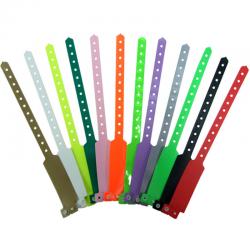
Silicone wristbands at gyms, water parks and clubs usually contain an HF 13.56 MHz chip that opens lockers and turnstiles and may hold a cashless balance. Music festivals and large events use similar NFC wristbands for entry and payments, and marathons use UHF bib tags for timing (a topic covered in its own chapter on race timing). Organisations that want such wristbands and cards can find options on our RFID wristbands and cards page.
Event tickets and smart posters
Some concerts and sports venues issue NFC tickets on cards or phones. NFC tags are also hidden in posters, product packaging and restaurant table stands: tap your phone and a web page, menu or payment link opens. These are low-cost NFC tags holding a short NDEF record such as a URL.
Evening: back home with the family
Pet microchips
If you have a dog or cat, a vet may have implanted a microchip the size of a grain of rice under its skin. Pet chips are passive LF tags at 134.2 kHz following ISO 11784/11785 and store a 15-digit number. A vet or shelter scanner held over the shoulders reads it from a few centimetres. Read more in RFID for animals.
Smart home gadgets
NFC also appears in small ways at home: tapping a phone on a speaker to pair it, or on a sticker by the bed to start a routine. Some printers and water purifiers use chips on cartridges and filters to confirm they are genuine.
Everyday RFID at a glance
| Everyday use | Typical technology | Typical read range |
|---|---|---|
| Office ID and door access card | HF 13.56 MHz (some LF 125 kHz) | 2-10 cm |
| Metro / bus card, NCMC card, metro token | HF 13.56 MHz, ISO/IEC 14443 | 0-5 cm |
| Contactless bank card, phone and watch payments | HF / NFC 13.56 MHz | 0-4 cm |
| FASTag | Passive UHF, 865-867 MHz | Up to a few metres |
| Hotel key card | HF 13.56 MHz | 0-5 cm |
| Library book tag | HF ISO/IEC 15693 (some UHF) | Up to about 30-60 cm |
| Clothing price label | Passive UHF | 1-5 m |
| Shop exit gate | EAS (AM or RF) or UHF RFID | About 1-2 m either side |
| Parcels, pallets, crates | Passive UHF | 1-8 m |
| Airport bag tag | Barcode plus UHF inlay (where used) | 1-5 m |
| Hospital wristband | Barcode, HF or UHF | Centimetres (HF) to metres (UHF) |
| Pet microchip | LF 134.2 kHz, ISO 11784/11785 | 2-10 cm |
| School attendance card | HF or LF; UHF on some buses | Centimetres; metres for UHF |
| Gym / club / event wristband | HF / NFC 13.56 MHz | 0-5 cm |
| Smart lock, home fob | HF / NFC (some LF) | 0-5 cm |
| NFC tickets, posters, packaging | NFC 13.56 MHz | 0-4 cm |
| E-passport | HF 13.56 MHz, ISO/IEC 14443 | 0-5 cm |
Notice the pattern: wherever a person should make a deliberate choice - pay, open a door, board a train - engineers pick HF/NFC so the card has to be tapped. Wherever objects need to be counted quickly or read on the move - cars, cartons, clothes - they pick UHF for its longer range and fast multi-tag reading.
Why RFID makes life easier
- Speed. A tap takes well under a second, and a toll read happens while the car is still rolling. No counting cash, no printing receipts, no waiting for a clerk.
- No line of sight. Unlike a barcode, a tag does not have to face the reader. Your card can stay in a wallet; a book's tag can be inside the cover.
- Many at once. UHF readers can identify hundreds of tags in seconds, which is what makes self-checkout of a book pile or a store stock count practical.
- Fewer mistakes and more convenience. Automatic reads remove typing errors in hospitals and warehouses, and one card can open doors, record attendance and pay at the canteen.
For a careful look at where RFID fits compared with barcodes and NFC, see RFID vs barcode vs NFC.
Privacy: myths versus facts
Because RFID is invisible, it attracts worry. Here are the common myths.
Myth: "RFID tags can track me anywhere, like GPS."
Fact: Passive tags contain no battery, no GPS and no transmitter of their own. They only answer when a compatible reader is within range - centimetres for HF and LF, a few metres for UHF. Location is known only where a reader is installed, and only to whoever runs it.
Myth: "Someone can steal my bank card details from across the room."
Fact: Contactless cards are designed for a few centimetres. Each payment uses a one-time cryptogram, and the card number seen by a terminal is not enough on its own to make most online purchases. Real risk is low, but if you are uneasy, a metal card sleeve blocks HF signals.
Myth: "My personal details are stored on the tag."
Fact: Most tags hold only an identifier. A FASTag, clothing label or pet chip stores a number; the meaning of that number lives in a protected database. Well-designed systems deliberately keep personal data off the tag.
Myth: "All RFID is equally secure."
Fact: Some older 125 kHz access cards can be copied easily, while payment cards, e-passports and modern access cards use cryptographic chips designed to resist cloning. Organisations that link tags to people also have duties under India's DPDP Act, 2023.
For a deeper treatment of cloning, skimming and relay attacks and how they are defended, read RFID security and privacy.
Where to go next
Each example in this chapter uses the same basic idea - a reader sends energy, a tag answers with its identity - tuned to a different frequency and range for the job. If this tour has made you curious about how those systems are designed and installed, start with the fundamentals in Module 1 of this Academy, and if you want structured, hands-on training, our paid RFID courses in India take you from these everyday examples to real project skills.
Watch & learn
Videos are from YouTube and their respective creators; they play only when you click.
Help India adopt this fast-growing technology - teach, consult or build projects with Indian RFID.
Frequently asked questions
Is the chip in my metro card the same as the one in my bank card?
Both use HF 13.56 MHz contactless technology based on ISO/IEC 14443, so they look similar to a reader. The applications inside are different: an open-loop card such as an NCMC card follows payment-card security rules, while some closed-loop transit cards use their own stored-value schemes.
Can my FASTag be read by anyone on the road?
A FASTag is a passive UHF tag that can be read by a compatible reader within a few metres. It only holds an identifier; the link to your bank wallet and vehicle details lives in the issuer and toll systems, so a stray read reveals little on its own.
Does my phone have RFID?
Most modern smartphones have NFC, which is a form of HF 13.56 MHz RFID. It lets the phone pay, read NFC tags and act like a card. Phones do not normally contain a UHF RFID reader.
Do RFID tags in clothes track me after I buy them?
The tag holds a product serial number, not your name, and it can only be read at a few metres by a UHF reader. Many retailers place it on a removable swing tag or care label that you can cut off at home.
Why does my pet chip need to be registered?
The chip only stores a number. A vet or shelter can read it, but they find you only if that number has been registered with your current contact details in a pet registry.
Join the 1-month Certified RFID Specialist Program - live online. New batch 12 January 2027.