How FASTag Works in India: RFID Tolling Explained
FASTag is the largest RFID deployment most Indians use every day. This chapter explains what the tag is, who runs the National Electronic Toll Collection system, what happens in the few seconds a vehicle spends in a toll lane, common problems and fixes, and what engineers can learn from it.
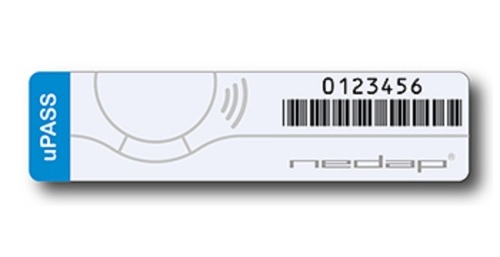
- FASTag is a passive UHF RFID sticker (EPC Gen2 / ISO/IEC 18000-63) fixed on the inside of the windscreen, linked to a prepaid wallet or bank account.
- It runs on National Electronic Toll Collection (NETC), operated by NPCI with NHAI and IHMCL, plus issuer banks (that issue tags) and acquirer banks (that serve toll plazas).
- In the lane, a fixed reader and antenna read the tag ID; the plaza system sends it via the acquirer bank and the NETC switch to the issuer bank, which debits the account and sends an SMS.
- Rules on KYC, one vehicle one tag, blacklisting and charges for vehicles without a valid FASTag change from time to time - check the latest NHAI / NPCI rules.
- FASTag shows how standard tags, a central registry and clear rules let RFID scale to crores of users.
What FASTag is
FASTag is India's electronic toll collection tag. Physically it is a passive UHF RFID sticker that you stick on the inside of your vehicle's windscreen, usually behind the rear-view mirror. Inside the sticker is a small chip and a printed antenna - the same kind of inlay used in retail and logistics labels. It follows the EPC Gen2 air interface, also published as ISO/IEC 18000-63 (formerly 18000-6C), and works in the Indian UHF band of 865-867 MHz.
The tag itself does not hold money. It carries a unique identifier that is linked, in a central system, to the vehicle registration number, the vehicle class and a payment account - either a prepaid FASTag wallet or a bank account. When the tag is read at a toll plaza, the toll is debited from that linked account.
Because it is passive, FASTag has no battery. It wakes up only when it is inside the radio field of a toll lane reader, uses that energy to reply with its ID and then goes silent again. If you want the physics behind this, read How RFID Works.
Who runs it: NETC, NPCI, NHAI and the banks
FASTag is the user-facing part of a national programme called National Electronic Toll Collection (NETC). Several organisations share the work:
- NPCI (National Payments Corporation of India) runs the NETC switch and the central registry (often called the mapper) that links tag IDs to vehicles and accounts, and routes transactions between banks - similar to the role it plays for UPI.
- NHAI (National Highways Authority of India) owns most national highway toll plazas and sets toll policy for them.
- IHMCL (Indian Highways Management Company Ltd), a company promoted by NHAI, manages the electronic toll programme on the highway side, including FASTag standards and plaza integration.
- Issuer banks (and other authorised issuers) sell FASTags to vehicle owners, complete KYC, hold the wallet or link the account, and handle customer complaints.
- Acquirer banks are appointed for toll plazas. They connect the plaza system to NETC and settle the toll money to the plaza operator.
- Toll plaza operators and system integrators install and run the lane equipment: readers, antennas, cameras, barriers and the plaza server.
This "issuer-acquirer-switch" model is borrowed from card payments. It means any FASTag from any participating issuer works at any NETC plaza, which is the key to national interoperability.
In the real world
A toll transaction, step by step
From the driver's point of view, the vehicle slows down, the barrier lifts and an SMS arrives. Behind that, the sequence looks roughly like this:
- Read: As the vehicle enters the lane, a fixed UHF reader and its antenna, mounted on a gantry or lane-side pole, power up the tag and read its ID (and typically other identifiers stored on the chip).
- Local check: The lane controller passes the tag data to the toll plaza server. The plaza keeps a frequently updated list of tag statuses, so it can quickly see whether a tag is active, blacklisted or low on balance.
- Vehicle class check: The class registered against the tag (car, bus, truck and so on) decides the toll. Many lanes also use cameras, sensors or the operator to confirm that the vehicle in the lane matches that class.
- Request to acquirer: The plaza server sends a toll transaction with the tag ID, plaza, lane, time and amount to its acquirer bank.
- NETC switch: The acquirer forwards the request to the NETC switch run by NPCI, which looks up the tag in the central registry and routes the request to the correct issuer bank.
- Debit: The issuer bank debits the linked prepaid wallet or bank account and returns a response through NETC to the acquirer.
- Barrier and SMS: The barrier opens and the user receives an SMS with the amount, plaza and time. In practice the barrier may open after the status check, and the debit and SMS may arrive a little later as the transaction completes in the background.
- Settlement: Later, NPCI settles money between issuer and acquirer banks, and the acquirer pays the plaza operator.
Why the windscreen, and why the tag breaks when peeled
Windscreen location
The toll lane antenna is aimed at the area where windscreens pass. Glass lets UHF signals through reasonably well, the inside of the windscreen protects the tag from rain, dust and car washes, and the position is consistent across vehicles so one antenna geometry works for most of them. The tag is usually placed near the centre top of the windscreen, behind the mirror.
Some windscreens are a problem. Glass with metallic coatings (for heat rejection) or certain films can block or weaken UHF signals. Tinted films with metal content, dashboard clutter or a tag stuck in the corner can all reduce read performance.
Tamper-evident, frangible design
A FASTag is designed to stop working if it is peeled off. The antenna is printed on a fragile layer and the adhesive is stronger than the antenna, so removal tears the antenna or separates it from the chip. This makes it hard to move a tag from a car (low toll) to a truck (high toll), which is the most obvious fraud. It also means you cannot reposition a tag once stuck - plan the spot before you peel the liner.
Vehicle classes, KYC and account rules
Vehicle classes
Every tag is issued for a specific vehicle class. Broad groups include cars, jeeps and vans; light commercial vehicles; buses and trucks; multi-axle vehicles; and heavy construction machinery or oversized vehicles. The class decides the toll, so a tag issued for the wrong class leads to wrong charges.
KYC and one vehicle, one tag
Issuers must complete KYC on the vehicle owner and link the tag to the vehicle's registration certificate. Over time, the authorities have tightened rules so that one vehicle has only one active FASTag and one FASTag is used for only one vehicle, and have asked users to update KYC and vehicle details. Tags that do not meet these rules can be deactivated. The exact requirements and deadlines change, so check the latest NHAI / NPCI rules and your issuer's notices.
Blacklisting and low balance
A tag can be put on a blacklist or exception list for reasons such as insufficient balance, incomplete KYC, a reported lost or stolen tag, or a closed account. A blacklisted tag is not accepted at the plaza even if it reads perfectly. Recharge or fix the issue with your issuer; it can take some time for the status to update across plazas.
No valid FASTag
Vehicles that enter a FASTag lane without a valid, working tag are charged a higher fee - typically double the toll. Some newer rules have offered alternative payment options at different rates. Rules change - check NHAI and NPCI for the current charges, passes and exemptions before relying on any figure.
Other uses, common problems and fixes
Beyond highway tolls
Because the tag and NETC infrastructure already exist, FASTag has been extended to other vehicle payments: parking at some airports, malls and municipal lots; fuel stations that accept FASTag payments; and city or state toll and entry points on non-NHAI roads. Each needs a reader at the entry or payment point connected to an acquirer on NETC. Availability varies by city and operator.
Common problems
| Problem | Likely cause | What to do |
|---|---|---|
| Tag not read at the plaza | Damaged or badly placed tag, metallic windscreen film, reader or antenna fault | Check the tag is flat and near the mirror; ask the operator to use a handheld reader; replace the tag if it fails often. |
| Tag read but rejected | Blacklisted: low balance, KYC pending, closed or hotlisted | Check status in your issuer app; recharge or complete KYC; wait for the status to update. |
| Damaged or peeling tag | Windscreen replaced, tag scratched or lifted | Buy a replacement from your issuer; do not tape over a torn tag. |
| Double deduction | Repeat read or reconciliation error | Raise a dispute with the issuer quoting the SMS details; refunds come through the issuer. |
| Wrong class charged | Tag issued for the wrong vehicle class, or class mismatch at the plaza | Ask the issuer to correct the class against your RC; dispute wrong charges. |
| Deduction when you did not travel | Wrong vehicle number mapped, manual entry error, misuse | Report immediately to the issuer and the national helpline listed on your issuer's site. |
How readers and antennas are set up in toll lanes
A FASTag lane is a carefully engineered read zone. Typical elements include:
- Fixed UHF readers, usually one per lane, often industrial-grade and rated for outdoor temperatures.
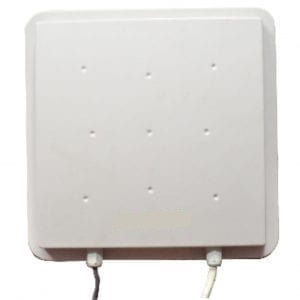
- Rugged, outdoor-rated antennas mounted on an overhead gantry or a lane-side pole, aimed down and back toward the approaching windscreen. Many installations use a fairly focused beam so that only the vehicle in that lane is read. See Types of RFID Reader Antennas for how such antennas are chosen.
- Power and zone tuning within India's limits (4 W EIRP in 865-867 MHz) so the reader catches tags reliably without reading vehicles in adjacent lanes or the queue behind.
- Vehicle detection (loops or sensors) to start a transaction, and often cameras for classification and evidence.
- Lane controller and plaza server that combine reads, class data and barrier control, and talk to the acquirer.
- Handheld readers as a fallback when a fixed read fails.
For general fixed-reader installations outside tolling, see fixed RFID readers.
Data, privacy and a short timeline
Data and privacy
The tag broadcasts an identifier, not your name or bank details. Personal data sits with issuer banks and in the central systems. However, every toll transaction creates a record of where and when a vehicle passed, which is location data. It is protected by banking and payment rules and, in India, by the Digital Personal Data Protection Act 2023. RFID privacy issues in general are covered in RFID Security & Privacy.
Timeline at a high level
- Early 2010s: pilots of RFID-based electronic toll collection on selected national highway stretches.
- Mid-to-late 2010s: nationwide rollout under NETC; banks start issuing FASTags widely; new vehicles increasingly come with tags fitted.
- February 2021: FASTag becomes mandatory at national highway toll plazas for most vehicles, with higher charges for vehicles without a valid tag.
- Since then: tighter KYC and one-vehicle-one-tag rules, extension to parking and other payments, and new pass and payment options.
The future, and what engineers can learn
What may come next
The government has spoken about satellite (GNSS) based tolling, where tolls are calculated from the distance a vehicle travels, and about barrier-free, multi-lane free flow (MLFF) tolling, where vehicles pass at speed under gantries that combine RFID readers with automatic number plate recognition (ANPR) cameras. These are plans and pilots that may evolve; FASTag is likely to remain part of the picture for some time, for example as an identifier or fallback, but follow official announcements for the actual roadmap.
Lessons for large-scale RFID
- Standards first: using EPC Gen2 tags and a defined data format let many manufacturers, banks and integrators work together.
- The tag is just a key: it stores an ID; the value, rules and status live in a central database that can be updated instantly.
- Design against fraud physically: a frangible, windscreen-mounted tag removes the easiest abuse without any software.
- Engineer the read zone: antenna type, aim, power and lane geometry matter as much as the tag.
- Plan for exceptions: unread tags, blacklists, disputes and fallbacks are part of the system, not afterthoughts.
If you want to work on systems like this, the RFID courses in India from Indian RFID teach the readers, antennas, encoding and integration skills behind them.
Watch & learn
Videos are from YouTube and their respective creators; they play only when you click.
Help India adopt this fast-growing technology - teach, consult or build projects with Indian RFID.
Frequently asked questions
Is FASTag RFID or NFC?
FASTag is UHF RFID, not NFC. It is a passive EPC Gen2 tag read from a few metres by fixed readers in toll lanes, while NFC works at 13.56 MHz over a few centimetres.
Does FASTag have a battery?
No. It is a passive tag. It takes its energy from the radio signal of the toll lane reader, so it never needs charging or replacement because of a battery.
Can I move my FASTag to another vehicle?
No. A FASTag is linked to one vehicle registration and is designed to stop working if it is peeled off. For a new vehicle you need a new tag, and the old one should be closed through the issuer.
What happens if my FASTag is not read at the toll plaza?
The operator may try a handheld reader or manual entry of the tag or vehicle number. If the tag is valid and the failure is due to the plaza equipment, rules have provided for relief to the user, but check the latest NHAI guidelines.
Can FASTag be used to track my vehicle everywhere?
A FASTag is only read where a reader is installed, such as toll plazas or participating parking sites. It is not a GPS tracker, but toll transaction records do show where and when a vehicle passed a plaza.
Why was money deducted twice?
Double deductions usually come from a repeated read or a reconciliation error. Raise a dispute with your issuer bank through its app, website or helpline, quoting the transaction details from the SMS.
Join the 1-month Certified RFID Specialist Program - live online. New batch 12 January 2027.