RFID for Queue Management
Queues waste time in hospitals, banks, government offices, theme parks and factory gates. This chapter explains how RFID cards, wristbands and vehicle tags measure and shorten queues, which components a system needs, how it compares with BLE and cameras, what to measure, and how to roll it out - with a worked factory truck-gate example.
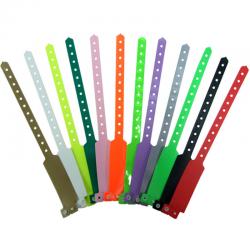
- RFID turns a queue into data: a card, wristband or vehicle tag is read where people or trucks join, get served and leave, so wait and service times are measured automatically.
- HF cards and wristbands suit people at counters and turnstiles; passive UHF windscreen tags suit trucks and vehicles at gates and yards.
- A useful system combines readers, a token or display system, SMS or app alerts and a dashboard showing average wait, throughput and SLA compliance.
- Little's Law (items in queue = arrival rate x time in system) links what you measure to how crowded a place becomes.
- Tell people what is collected and why, keep personal data off the tag, and follow the DPDP Act 2023 when tags link to identifiable people.
The queue problem
Everyone has stood in a queue that seemed to go nowhere. In India the problem shows up everywhere: hospital outpatient departments (OPDs) where patients wait hours to see a doctor, bank branches on salary day, government offices for certificates and licences, theme parks on holidays, stadiums and concerts, airport check-in and security, office and college canteens at lunch, toll plazas, and long lines of trucks outside factories, warehouses and ports waiting to unload.
Queues cost money and goodwill. Patients and customers get frustrated and leave; trucks pay detention charges; drivers and staff waste hours; and managers rarely know the real numbers. Ask most organisations "what is your average waiting time at 11 a.m.?" and the honest answer is a guess. That is where RFID helps: it turns invisible waiting into measured data, and it removes slow manual identification steps that create queues in the first place.
How RFID helps with queues
1. Token or card issued at entry
The simplest approach: when a person joins the queue, they receive (or already carry) an RFID card - a patient card, a reusable token card or an employee ID. It is tapped or read at the entry desk, which timestamps their arrival. When they reach the service counter it is read again, and once more when they leave. The software now knows each person's waiting time (entry to counter) and service time (counter to exit) without anyone writing anything down. HF 13.56 MHz cards are typical here because a deliberate tap gives a clean, unambiguous timestamp.
2. Wristbands at theme parks and events
Theme parks, water parks and large events issue RFID wristbands at entry. The same band opens turnstiles, pays for food and lockers and can be read at ride entrances. Reads at the start of a ride queue and again at the boarding point show the live wait for each ride, which can be shown on screens and apps so visitors spread out. Some parks use the band for virtual queue slots: a visitor taps at a kiosk to reserve a time and comes back later instead of standing in line. Suitable products include our RFID wristbands and cards.
3. Vehicle tags for truck queues and yards
Factories, warehouses, mines, cement plants and ports often have long truck queues at the gate and inside the yard. A passive UHF windscreen tag on each truck - similar in principle to FASTag - is read by fixed readers at the gate, weighbridge, loading bay and exit. The system logs each stage automatically, opens boom barriers for authorised trucks and can call the next truck to a free bay. See the yard and logistics examples in RFID applications, and the toll-plaza parallel in FASTag and RFID in India.
4. Patient and staff flow in hospitals
Hospitals can issue patients an RFID card or wristband at registration and place readers at the OPD waiting area, consultation rooms, pharmacy, laboratory and billing. This shows where patients actually wait longest - often not the doctor's room but the lab or billing counter. Staff badges can also show how many doctors and nurses are on duty in each area, so managers can rebalance during peaks.
5. Cashless canteens
Canteens in offices, factories and colleges slow down at lunch because of cash handling and coupons. With an RFID employee card or prepaid card, a tap at the counter deducts the meal amount or logs a subsidised meal in about a second. Some canteens put UHF tags on plates or trays so a whole tray is billed in one read.
In the real world
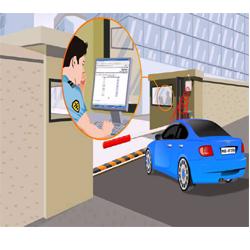
Components of an RFID queue system
- Tags or credentials: HF cards, NFC-enabled ID cards, wristbands, or UHF windscreen tags for vehicles.
- Readers at key points: entry and exit points, service counters, ride entrances, weighbridges and loading bays. Desk readers for taps; fixed RFID readers with antennas for vehicles and hands-free lanes.
- Barriers and turnstiles (optional): boom barriers or turnstiles controlled by the reader for access, as in our RFID gate systems.
- Displays: token display boards, counter displays and screens showing "now serving" or live waiting times.
- Notifications: SMS, WhatsApp-style messages or an app telling a patient or driver when it is their turn, so they can wait elsewhere.
- Software and dashboard: collects reads, matches them into journeys, and shows average and maximum wait, throughput, counter utilisation and SLA compliance by hour, day and location.
- Integration: links to the hospital information system, ERP, weighbridge software or point-of-sale so records match real transactions.
RFID with token systems, BLE and cameras
Combining RFID with token display systems
Many offices already use a token machine that prints a number and a display that calls it. RFID fits neatly on top: instead of a paper slip, the person taps an ID or patient card to get a token; the counter staff tap the same card when they start serving. Now the token system has exact timestamps per person, can recognise returning visitors and priority categories, and can send their position by SMS.
BLE beacons and cameras as alternatives
| Technology | Strengths | Limitations |
|---|---|---|
| RFID (HF cards, UHF tags) | Exact identity and timestamp at defined points; low-cost passive tags; works without phones | Only knows events at reader points; readers must be placed thoughtfully |
| BLE beacons / phone apps | Continuous approximate location; uses visitors' phones | Needs app and Bluetooth on; location accuracy typically metres; battery tags for non-phone users |
| Cameras and video analytics | Counts queue length without any tag; good for crowd density | Identity is hard or intrusive; lighting and occlusion issues; stronger privacy concerns |
In practice, many sites combine them: cameras or sensors to count how long the line is, RFID to measure each person's or vehicle's actual journey and to automate identification at counters and gates.
Privacy and consent
Queue data can be personal: a patient's visit to a particular clinic, or an employee's canteen habits. Good practice is straightforward:
- Display clear notices explaining what is recorded and why.
- Store only an identifier on the tag; keep names and details in a secured backend.
- Use aggregated or anonymised data for dashboards wherever individual identity is not needed.
- Set retention periods and delete raw journey data when it is no longer required.
- Where tags are linked to identifiable people, follow India's Digital Personal Data Protection Act, 2023, including notice, purpose limitation and security safeguards.
For the security side - cloning, access control and data protection - see RFID security and privacy.
Implementation steps
- Map the journey. Walk the process and list each step where people or vehicles wait or are served: entry, registration, counter, lab, billing, exit; or gate, weighbridge, bay, exit.
- Measure a baseline. Even a few days of manual timing at peak and off-peak hours gives you something to compare against.
- Choose credentials. HF cards or wristbands for people; UHF windscreen tags for vehicles. Decide whether they are reusable, issued per visit or permanent.
- Place readers. Put readers only where an event matters. Survey vehicle lanes so a reader catches the right truck and not one in the next lane.
- Set up software and integration. Define how reads become journeys, what the dashboard shows and which systems it connects to.
- Pilot. Start with one OPD, one gate or one canteen. Check read reliability and data quality daily.
- Train and communicate. Counter staff, guards and drivers need short, clear instructions; visitors need signs.
- Act on the data and scale. Adjust staffing and appointment slots, remove manual steps, then extend to other locations.
The broader method is covered in the RFID implementation guide.
KPIs to track
| KPI | What it means | How RFID measures it |
|---|---|---|
| Average waiting time | Mean time from joining the queue to reaching service | Entry read to counter read |
| Maximum / 90th percentile wait | How long the unluckiest people wait | Distribution of entry-to-counter times |
| Average service time | Time spent at the counter, bay or room | Counter read to exit (or next-stage) read |
| Throughput | People or vehicles served per hour | Count of completed journeys per period |
| Turnaround time (TAT) | Total time on site, gate-in to gate-out | First read to last read |
| SLA compliance | Share served within a target time, e.g. 30 minutes | Percentage of journeys under the threshold |
| Counter utilisation | How busy each counter or bay is | Service time divided by open time |
| Abandonment rate | People who leave before being served | Entry reads with no counter read |
One simple rule ties these together. Little's Law says that, on average, the number of people or vehicles in a system equals the arrival rate multiplied by the average time each spends in it (L = λ x W). If you cut the time in system, the crowd shrinks proportionally, even with the same number of arrivals.
Worked example: a factory truck gate
Before RFID
A manufacturing plant receives about 10 trucks per hour over a 16-hour working day (around 160 trucks). At the gate, a guard checks documents, writes the vehicle number in a register and calls the stores department. This takes about 8 minutes per truck, with two gate desks. Inside, trucks wait for a weighbridge slot and a free bay. The plant estimates the average gate-in to gate-out turnaround is 4 hours.
Using Little's Law: trucks on site on average = 10 per hour x 4 hours = 40 trucks. At peaks, when 20 trucks arrive in an hour, the two desks can handle only about 15 per hour (2 desks x 60 / 8), so a line builds up on the road outside.
After RFID
Regular transporters receive UHF windscreen tags, linked in the system to the vehicle and its delivery schedule. Fixed readers at the gate, weighbridge, bays and exit log each stage. At the gate, a tagged truck with a valid booking is read as it approaches, the guard confirms on screen, and the barrier opens - about 2 minutes per truck. The weighbridge reads the tag and records the weight against the right trip automatically; the dashboard shows which bays are idle so the next truck is called by SMS.
Suppose these changes bring average turnaround down to 3 hours. Trucks on site on average = 10 x 3 = 30 trucks, a quarter fewer occupying the yard. Gate capacity rises to about 60 trucks per hour (2 desks x 60 / 2), so the morning peak no longer spills onto the road. Just as importantly, the plant can now see that most of the remaining time is spent waiting for bays - which points to unloading capacity, not the gate, as the next thing to fix.
If you want to design and deploy systems like these professionally, our paid RFID courses in India cover reader placement, UHF vehicle identification and dashboards in hands-on sessions.
Help India adopt this fast-growing technology - teach, consult or build projects with Indian RFID.
Frequently asked questions
Does RFID by itself reduce queues?
Not on its own. RFID measures exactly where time is lost and speeds up identification steps such as gate entry or billing; the queue shrinks when you act on that data by adding counters at peaks, booking slots or removing manual checks.
Which RFID technology is best for a truck gate?
Passive UHF windscreen tags in the 865-867 MHz band, read by fixed readers at the gate, are the usual choice because they read at several metres without the driver stopping or getting out.
Can RFID replace a token display system?
They work best together. The token display tells people when to go to which counter; RFID records when each person actually arrived, was served and left, so you can measure real waiting times rather than estimates.
Is it legal to track visitors with RFID wristbands?
Yes, if done transparently. Tell visitors what is recorded and why, collect only what you need, protect the data and delete it when no longer needed, in line with India's DPDP Act 2023 where the data relates to identifiable people.
How long does an RFID queue project take?
A focused pilot at one site, such as a single OPD or truck gate, typically takes a few weeks to a few months including survey, installation, software set-up and staff training. Scaling depends on integration with existing systems.
Join the 1-month Certified RFID Specialist Program - live online. New batch 12 January 2027.