What is RFID?
RFID (radio frequency identification) lets a reader identify objects, animals or people automatically using radio waves and a small electronic tag, without line of sight. This chapter explains what RFID is, where it came from, what parts make up a system and why it matters to businesses today.
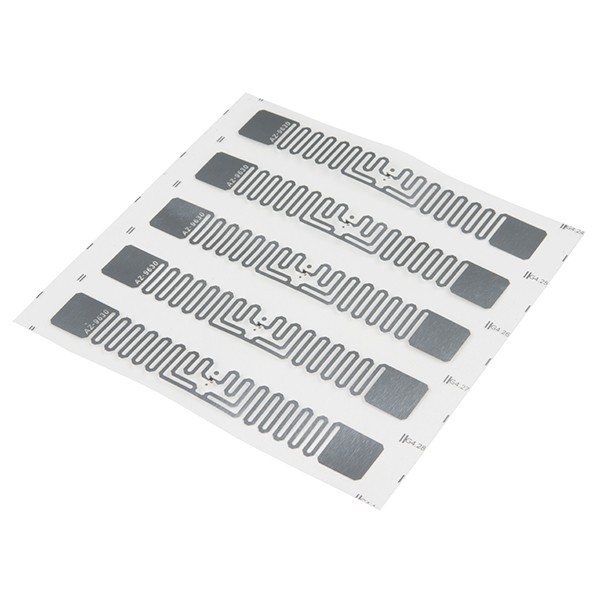
- RFID stands for Radio Frequency Identification: a reader uses radio waves to identify a tag without needing to see it.
- Every RFID system has three core parts: a tag (chip plus antenna), a reader with its antenna, and software that turns reads into useful data.
- Passive tags have no battery and are powered by the reader; active tags carry a battery and transmit on their own.
- RFID grew from WWII aircraft identification (IFF) through anti-theft tags and toll systems to today's EPC Gen2 / RAIN RFID standard.
- You already use RFID daily: FASTag, metro cards, office access cards, library books and tagged apparel are all RFID.
RFID in one sentence
RFID (Radio Frequency Identification) is a technology that identifies objects automatically by exchanging radio signals between a reader and a small electronic tag attached to the object. The tag holds a unique identifier, and often a little extra data, in a microchip. When the tag comes within range of a reader's antenna, the reader asks "who is there?", the tag answers with its ID, and software decides what that answer means: a carton has left the warehouse, an employee has entered the building, a car has passed a toll plaza.
The key difference from older identification methods is that RFID does not need line of sight. A barcode must be pointed at a scanner and read one at a time. An RFID tag can be read inside a carton, under a label, at an angle, and alongside dozens or hundreds of other tags in the same second. That one property is what makes RFID so useful for inventory, logistics, access control and asset tracking.
How RFID works, briefly
A reader, through its antenna, sends out a radio signal. For a passive tag, that signal does two jobs at once: it delivers the energy the chip needs to wake up, and it carries the reader's commands. The tag's chip then replies, not by switching on its own transmitter, but by changing how its antenna loads or reflects the reader's signal. The reader detects those tiny changes and decodes them into data.
At low and high frequencies (LF and HF) the reader and tag are coupled magnetically, a bit like the two coils of a transformer, so ranges are short. At ultra-high frequency (UHF) the tag reflects part of the reader's radio wave back, a technique called backscatter, which gives ranges of several metres. The full step-by-step process, including how a reader sorts out hundreds of tags answering at once, is explained in How RFID Works.
In the real world
A short history of RFID
RFID is not new. Its ideas are older than the transistor radio, and it has been refined over about eighty years.
1940s: Identification Friend or Foe
During the Second World War, radar could show that an aircraft was approaching but not whose aircraft it was. The British developed IFF (Identification Friend or Foe): a transponder on friendly aircraft that responded when it received a radar signal, so ground stations could tell friend from enemy. IFF transponders were active, powered devices, but the principle of "interrogate, then identify by the response" is exactly what an RFID reader does today. In 1948 a paper by Harry Stockman, "Communication by Means of Reflected Power", described sending information by modulating a reflected radio signal, which is the theoretical basis of passive backscatter tags.
1960s-1970s: anti-theft and the first patents
The first mass-market commercial use was electronic article surveillance (EAS): the simple tags in shops that set off an alarm at the exit. These were "1-bit" devices: they could only say "I am here", not who they were. During the 1970s, researchers and inventors worked on tags that carried real identity data. Patents were granted for passive transponders with rewritable memory, and research at Los Alamos National Laboratory in the USA explored tracking livestock and vehicles with radio tags. Low-frequency tags for animals and early electronic toll collection grew out of this work.
1980s-1990s: tolls, animals and access cards
Electronic toll collection, cattle and pet identification, factory automation and contactless door-access cards spread through the 1980s and 1990s. Standards began to appear so that tags and readers from different makers could work together, for example ISO 11784/11785 for animal identification at low frequency, and later ISO/IEC 14443 and ISO/IEC 15693 for HF contactless cards and labels. As chips became cheaper and smaller, HF smart cards for transport and payment took off.
1999-today: EPC, Gen2 and RAIN RFID
In 1999 the Auto-ID Center at MIT, backed by large retailers and consumer goods companies, proposed a radical idea: give every individual product a unique Electronic Product Code (EPC) stored on a very cheap passive tag, so items could be tracked through the supply chain automatically. That work moved to EPCglobal (part of GS1), which in 2004 ratified the EPC Class 1 Generation 2 ("Gen2") UHF air interface. Gen2 was then adopted internationally as ISO/IEC 18000-6C, today known as ISO/IEC 18000-63. Gen2 made UHF tags interoperable worldwide and pushed prices down dramatically.
In 2014 the industry adopted the brand name RAIN RFID for passive UHF RFID based on Gen2, much as "Wi-Fi" is the name for IEEE 802.11. Alongside it, NFC (Near Field Communication), built on HF 13.56 MHz technology, put an RFID-style reader into most smartphones.
The core components of an RFID system
However large or small, every RFID system is built from the same basic building blocks.
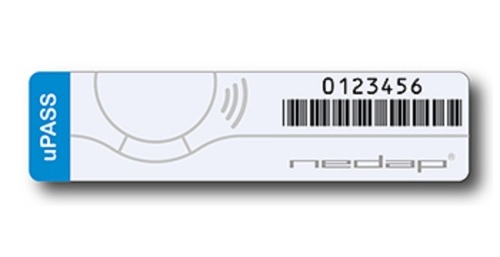
- Tag (transponder): a microchip connected to an antenna, mounted on a label, card, plastic housing or other carrier. The chip stores an identifier (and sometimes user data) and handles the radio protocol. The antenna collects energy and carries the signal.
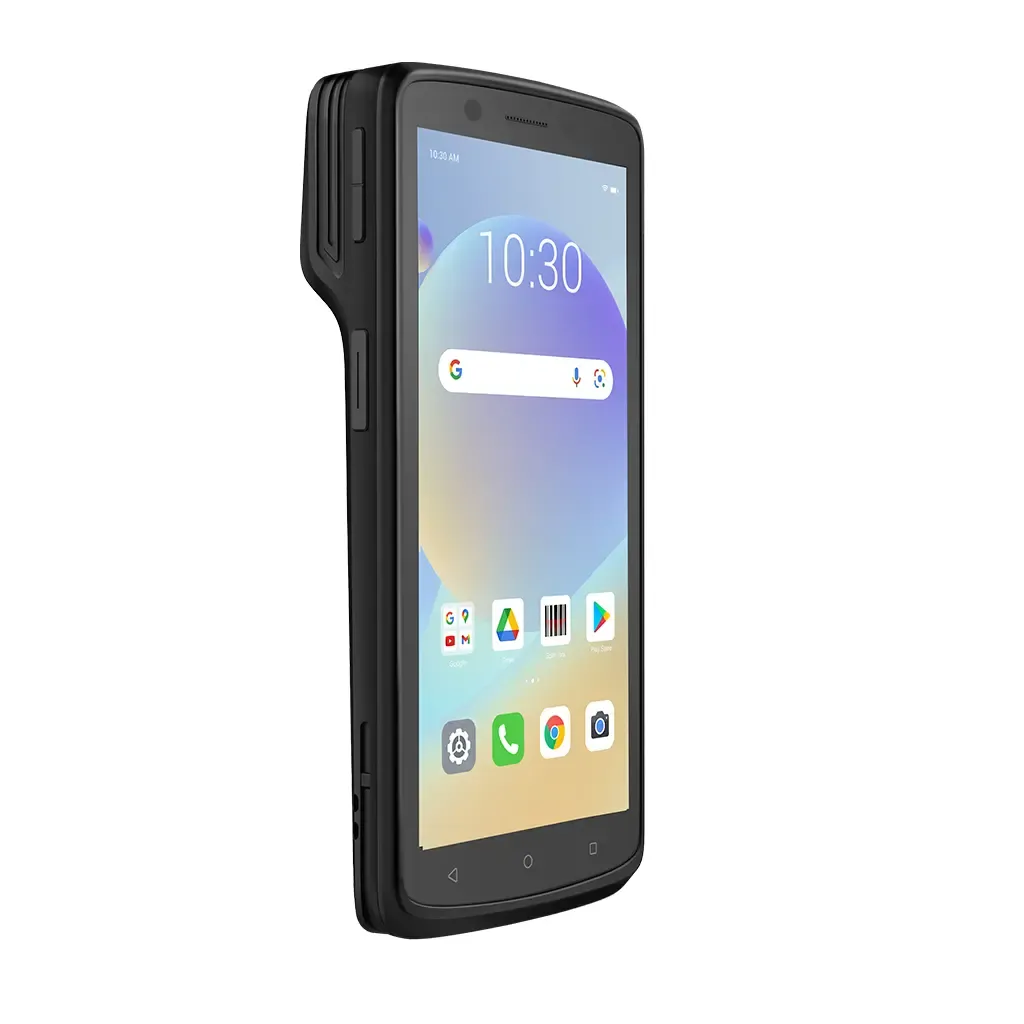
- Reader (interrogator): the electronic unit that generates the radio signal, sends commands, receives the tags' replies and passes the data on. Readers can be fixed (mounted at a door or conveyor), handheld, built into printers, or embedded in other devices such as smartphones.
- Reader antenna: radiates the reader's signal into a defined zone and picks up tag responses. Some readers have built-in antennas; fixed readers usually connect to one or more external antennas by coaxial cable.
- Software: middleware filters raw reads (one tag can be read many times a second), adds context such as location and time, and sends meaningful events to business systems like a WMS, ERP or access-control database.
In real projects you also need printers or encoders to program tags, mounting hardware, network and power. The next chapter, Components of an RFID System, walks through each piece in detail.
Passive vs active RFID in brief
The most important way to classify tags is by where their power comes from.
| Type | Power source | Typical range | Indicative tag cost | Typical uses |
|---|---|---|---|---|
| Passive | Energy from the reader's signal; no battery | A few cm (LF/HF) to about 10 m or more (UHF) | A few rupees for UHF labels in volume; more for rugged tags | Retail, logistics, libraries, access cards, FASTag |
| Battery-assisted passive (BAP) | Battery powers the chip; reply still by backscatter | Longer and more reliable than passive | Hundreds of rupees and up | Sensor logging, cold chain, difficult read zones |
| Active | Own battery and own transmitter | Tens to hundreds of metres | Typically ₹1,000 and up | Vehicle yards, containers, real-time location of people and equipment |
Passive tags are cheap, thin and last for years because there is no battery to run out, which is why they make up the vast majority of RFID tags in use. Active tags cost more and need battery replacement, but they can be read from much further away and can beacon on their own schedule. The chapter on types of RFID tags goes much deeper, including read-only versus rewritable memory and the many physical form factors.
RFID you already use every day
Most people interact with RFID several times a week without noticing.
FASTag on Indian highways
The FASTag on a vehicle windscreen is a passive UHF RFID sticker. As the vehicle approaches a toll lane, a reader mounted overhead or at the side reads the tag's ID, and the toll amount is deducted from the linked bank or wallet account. FASTag became mandatory for most vehicles on national highways in 2021 and is one of the most visible large-scale RFID deployments anywhere.
Metro and transit cards
Metro smart cards and many contactless bus and rail cards are HF (13.56 MHz) cards that follow ISO/IEC 14443. You tap the card on a gate reader; the reader and the card's chip authenticate each other and update the stored value or trip record in a fraction of a second. India's National Common Mobility Card (NCMC) uses the same family of contactless technology.
Office and hotel access
The ID card you wave at an office door, or the hotel key card that opens your room, is RFID: often 125 kHz LF in older systems, and HF in newer, more secure systems.
Libraries
Many libraries tag every book, usually with HF ISO/IEC 15693 labels (with UHF growing). Self-service kiosks can check out a whole stack of books placed on a pad at once, security gates detect books that have not been issued, and staff can audit shelves with a handheld reader in a fraction of the time a barcode audit would take.
Retail and apparel
Many fashion and apparel brands now put a UHF RFID inlay inside the price tag or care label. Store staff can count every item on the shop floor in minutes with a handheld reader, which keeps stock accuracy high, so online orders can be fulfilled from store stock and fewer sales are lost because "the system says we have it but we cannot find it".
Animals, cars and more
Pets and livestock carry tiny glass-encapsulated LF tags under the skin or in ear tags. Most modern car keys contain an LF transponder for the engine immobiliser. Smartphones read NFC tags on posters and products, and contactless bank cards use the same HF technology.
Why RFID matters
RFID matters because it turns the physical world into data automatically, with very little human effort. The main business benefits are:
- Speed: hundreds of tags can be read per second, so a full carton or a whole rack can be counted in one pass.
- No line of sight: tags can be read inside packaging, at odd angles and while moving, so processes need not stop for scanning.
- Accuracy: automatic reads remove keying and scanning mistakes. Inventory accuracy in tagged operations is typically far higher than in manual or barcode-only processes.
- Unique identity: each tag can carry a serialised ID, so you track individual items, not just product types, which is valuable for warranty, recalls, anti-counterfeiting and asset history.
- Durability: rugged tags survive dirt, washing, heat and outdoor use that would destroy a printed barcode.
- Automation: fixed readers at doors, conveyors and dock gates record movements without anyone pressing a button.
RFID is not magic, and it is not right for every job. Tags cost more than a printed barcode, metal and liquids affect performance, and a poorly designed system can miss reads or read tags it should not. Getting it right needs the correct tag, careful reader placement and testing in the real environment. Those trade-offs are covered honestly in Advantages and Disadvantages of RFID.
RFID in the Indian context
India has a well-defined regulatory and standards environment for RFID. Passive UHF RFID in India uses the 865-867 MHz band, which the Wireless Planning and Coordination (WPC) wing of the Department of Telecommunications has made licence-free for RFID within set power limits. GS1 India supports the EPC numbering standards used to encode globally unique IDs on tags. When RFID data relates to identifiable people, for example staff badges, student attendance or patient wristbands, the Digital Personal Data Protection (DPDP) Act, 2023 applies to how that data is collected, used and stored.
Beyond FASTag and metro cards, Indian organisations use RFID for warehouse and retail inventory, jewellery stock audits, library automation, hospital asset and linen tracking, manufacturing work-in-progress, IT asset audits, laundry, event access and vehicle access control.
Where to go next
You now know what RFID is, where it came from and why it matters. The best next step is to understand exactly how a reader and tag talk to each other. Continue with How RFID Works, then work through the rest of Module 1. If you already have a project in mind, the later modules on applications and implementation will help you plan it, and the Indian RFID team is always happy to discuss your requirements.
Watch & learn
Videos are from YouTube and their respective creators; they play only when you click.
Help India adopt this fast-growing technology - teach, consult or build projects with Indian RFID.
Frequently asked questions
What is the full form of RFID?
RFID stands for Radio Frequency Identification. It is a way of identifying and tracking items automatically using radio waves, a tag attached to the item and a reader.
Is RFID the same as a barcode?
Both identify items, but a barcode must be seen by an optical scanner one at a time, while RFID uses radio and can read many tags at once, through packaging and without line of sight. Many businesses use both together.
Does an RFID tag need a battery?
Most do not. Passive tags, which make up the large majority of tags in use, are powered by the energy from the reader's signal. Active and battery-assisted tags carry a battery for longer range or extra functions such as sensing.
Is FASTag an RFID tag?
Yes. FASTag is a passive UHF RFID sticker on the vehicle windscreen. A reader at the toll plaza reads its ID and the toll is debited from the linked account.
How far can RFID be read?
It depends on the frequency and tag type: a few centimetres for LF and HF cards, up to roughly 10 metres or more for passive UHF tags in good conditions, and far longer for active tags.
Join the 1-month Certified RFID Specialist Program - live online. New batch 12 January 2027.