Rooftop & Overhead Fixed RFID Readers
Overhead and rooftop RFID readers look down on a whole area instead of watching a single doorway. This chapter explains ceiling-mounted gateways, high-mounted fixed readers, outdoor long-range readers and beam-steering arrays, with indicative mounting heights, coverage and read distances, plus power, weatherproofing, interference control and installation checklists.
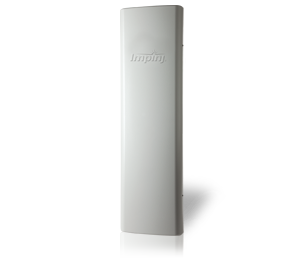
- Overhead readers cover zones from the ceiling, giving continuous floor visibility without people walking around with handhelds.
- Coverage depends on mounting height, tilt, power and tag sensitivity; indicative footprints are tens to a little over a hundred square metres per ceiling reader.
- Outdoor long-range readers identify vehicles at gates, yards, parking and tolling, and need IP-rated housings and surge protection.
- Beam-steering array readers can estimate where a tag is and which way it is moving, at higher cost and with careful calibration.
- Stray reads are controlled with power, antenna placement, filters, zoning logic and dense-reader settings, not by guesswork.
What overhead and rooftop readers are
Most fixed RFID readers watch a choke point - a dock door, a gate or a conveyor. Overhead readers take a different approach: they are mounted high on the ceiling, a pole, a wall or a gantry and look down on an area, reading tags continuously across a zone. Rooftop and outdoor readers are their long-range cousins, mounted on canopies, poles or gantries to identify vehicles and large assets.
Both are passive UHF (RAIN RFID, EPC Gen2 / ISO/IEC 18000-63) systems in almost all cases, operating in India in the 865-867 MHz band with a radiated limit of 4 W EIRP (typically a 1 W transmitter feeding an antenna of about 6 dBi gain). For an overview of fixed reader hardware, see our fixed RFID readers range.
Types of overhead and long-range readers
Ceiling-mounted gateways (all-in-one reader-antennas)
A single enclosure containing the reader, one or more antennas and networking, mounted flat on or suspended from the ceiling. They are designed to look tidy in shops and offices, install with one network cable and report every tag in their zone at regular intervals. They are the usual building block for store-floor visibility.
High-mounted fixed readers with external antennas
A conventional fixed reader with separate antennas mounted on poles, walls, racking or gantries. This gives more freedom to shape coverage - antennas can be aimed at an aisle, a staging lane or a dock apron - and is common in warehouses and factories. Choosing and placing the antennas is covered in RFID Reader Antennas.
Rooftop and outdoor long-range readers
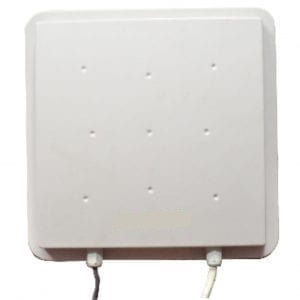
Weatherproof readers, often with integrated high-gain antennas, mounted on gate canopies, poles or gantries. They read windscreen or headlamp tags on vehicles, tags on containers, trailers and large returnable assets. Toll collection is the best-known example in India; see FASTag and RFID in India. The same class of reader is used for factory gates, parking, fleet yards and residential access.
Phased-array and beam-steering readers
These readers use an array of antenna elements and electronically steer a narrow beam across the area below. By noting which beam directions see a tag most strongly, and how signal and phase change over time, the system can estimate the tag's position and whether it is moving - for example, through a doorway in or out, or from back room to sales floor. Location accuracy depends heavily on the environment, mounting and calibration, so treat vendor accuracy claims as conditions-specific and verify them on site.
In the real world
Use cases
- Retail store floor visibility - near-real-time stock by zone, back room vs sales floor, fitting-room activity and loss alerts without manual counts.
- Warehouse zones - confirm what is in a staging lane, quarantine area or bulk storage block.
- Dock doors - overhead or high-mounted antennas above and beside the door read pallets as they pass, sometimes with direction detection.
- Conveyor and sortation - an overhead antenna above a conveyor reads cartons as they move; tunnels shield neighbouring lines.
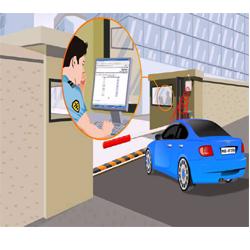
- Yard and gate automation - identify trucks, trailers and containers entering or leaving, and link to weighbridge or access systems.
- Vehicle identification - tolling, parking, staff vehicle access and fleet movement logs.
Mounting heights and coverage
The figures below are indicative and meant for planning conversations, not designs. Every site must be surveyed and tested.
| Setting | Typical mounting height (indicative) | Typical floor coverage per reader (indicative) |
|---|---|---|
| Retail store, office, library | About 3 - 5 m (ceiling height) | Roughly 30 - 150 m² for an all-in-one ceiling reader |
| Warehouse with high roof | Readers often suspended at about 4 - 8 m rather than at roof level | Similar per-reader area if dropped to a suitable height; less if mounted very high |
| Beam-steering array reader | About 4 - 8 m | Often larger than a simple gateway, depending on model and conditions |
| Outdoor gate or toll gantry | About 4 - 6 m above the lane | One or two lanes, aimed at the tag zone on the vehicle |
What changes the footprint
- Height - higher mounting spreads the beam over a larger area but increases the distance to every tag, so weak or poorly placed tags drop out first. There is usually a sweet spot rather than "higher is better".
- Tilt - aiming the antenna or reader shifts the footprint; tilting towards a wall or doorway helps cover a zone edge but can spill into the next zone.
- Power - more power enlarges the footprint up to the regulatory limit, but also increases stray reads and interference with neighbouring readers.
- Tag sensitivity and placement - modern sensitive chips on well-designed inlays read much further than older or tiny tags. Tags on liquids, metal, or deep inside stacks may need a reader much closer.
- Environment - shelving, metal fixtures, people and stock density all absorb and reflect energy, making coverage uneven.
Standard read distances compared
The table compares typical read distances for passive UHF tags across reader types. These are typical / indicative ranges only - real distances vary with tag, power, orientation and environment.
| Reader type | Typical read distance, passive UHF (indicative) | Notes |
|---|---|---|
| Handheld reader | About 1 - 6 m with standard labels; less for small tags | Operator-directed, battery-limited |
| Fixed portal (dock door, gate) | About 3 - 8 m across the portal | Antennas on both sides and above; controlled zone |
| Overhead ceiling reader | About 3 - 10 m slant distance to tags on or near the floor | Coverage area matters more than maximum distance |
| Long-range outdoor reader | About 5 - 15 m to vehicle or large asset tags; more in ideal conditions with tuned tags | High-gain antenna, tags designed for long range |
For a deeper look at handheld ranges by tag type, see Handheld RFID Readers, and for the physics of range see RFID read range.
Power, network and weatherproofing
Power over Ethernet
Many ceiling readers run on PoE (IEEE 802.3af, up to about 15.4 W at the switch port) or PoE+ (IEEE 802.3at, up to about 30 W at the port). One cable carries both power and data, which simplifies ceiling installation. Check the reader's power class against the switch's per-port and total PoE budget; array readers and readers with heaters often need PoE+ or higher. Use a switch with enough budget to run all readers at full transmit power at once.
Network
Overhead readers generate a steady stream of reads. Put them on a dedicated VLAN, give them fixed IP addresses or DHCP reservations, synchronise their clocks (NTP) so timestamps line up, and filter or aggregate reads at the reader or edge so raw data does not flood the network. The middleware chapter explains how zone events are produced from raw reads.
Weatherproofing outdoors
Outdoor readers should carry an IP rating suited to the location - typically IP65 or higher for rain and dust exposure, with IP66 or IP67 where water jets or heavy monsoon rain are expected. Check the operating temperature range against Indian summers, especially for housings in direct sun. Use outdoor-rated cable, drip loops and sealed glands.
Lightning and surge protection
Pole and gantry readers are exposed to lightning-induced surges. Bond poles and enclosures to a proper earth, fit surge protectors on Ethernet and power lines at both ends, and use coaxial lightning arrestors on external antenna cables. A single surge can destroy a reader and the switch port it connects to.
Interference and dense-reader mode
Overhead deployments place many readers close together, all transmitting in the same narrow band. In India the band is only 2 MHz wide, so channels are limited. Without control, one reader's transmission can drown out another reader's tag replies.
- Dense reader mode (DRM) - EPC Gen2 supports tag reply settings that place tag responses away from reader carrier frequencies, so readers can operate near each other with less interference. Enable the dense or "auto" mode recommended by the reader maker for multi-reader sites.
- Synchronisation - many reader systems can be time-synchronised so nearby readers transmit in turns or coordinated slots.
- Channel planning - where the reader allows, assign channels to neighbouring readers to minimise overlap.
- Power discipline - use only the power needed for each zone; excess power is the main source of cross-zone interference.
Calibration, zoning and stray-read control
Zoning answers the question "which area is this tag in?" A tag is often read by more than one overhead reader, so software decides the zone by comparing signal strength, read counts and timing over a short window. Calibrate by placing reference tags at known points - zone edges, doorways, high shelves - and adjusting power, tilt and software thresholds until each reference tag reports in its correct zone.
- Reference tags - permanent tags at fixed points help detect when a reader drifts or fails.
- Filters - ignore EPCs outside your company prefix or encoding scheme.
- Dwell and smoothing - require a tag to be seen in a zone for a minimum time before declaring a move.
- Shielding and placement - keep readers away from walls that back onto another zone; use RF-absorbing material only where planning shows it is needed.
Installation checklist
- Complete a site survey and RF test with real tagged stock - see RFID Site Survey & Testing.
- Draw a coverage plan with zones, mounting points, heights and overlaps.
- Confirm ceiling structure, false-ceiling access and safe mounting hardware.
- Check PoE budget, cable runs (copper Ethernet segments up to 100 m), VLAN and IP plan.
- Set each reader to the India region (865-867 MHz) and confirm radiated power stays within 4 W EIRP.
- For outdoor units: IP rating, sun exposure, earthing, surge protection and secure enclosures.
- Enable dense-reader settings and synchronisation; set per-zone power.
- Place reference tags and calibrate zones; document final settings.
- Integrate with middleware and business systems; test zone events end to end.
- Set up monitoring for reader health, connectivity and reference-tag reads.
Common problems and fixes
| Problem | Likely cause | Fix |
|---|---|---|
| Items missing from counts in one area | Coverage gap, reader too high, tags on metal or liquids | Lower or add readers; increase overlap; review tag choice |
| Items reported in the wrong zone | Power too high, poor tilt, no dwell logic | Reduce power, re-aim, add dwell and RSSI thresholds |
| Read performance drops when more readers are added | Reader-to-reader interference | Enable dense reader mode, synchronise, plan channels |
| Reader reboots or drops off network | Insufficient PoE budget or long cable runs | Check per-port and total budget; use PoE+; shorten runs |
| Outdoor reader fails after a storm | Surge damage, poor earthing | Install surge protection and proper earthing at both ends |
| Vehicles missed at gate | Tag position on windscreen, metallised glass, speed | Standardise tag placement, use suitable tags, adjust antenna aim, slow vehicles |
| Network flooded with reads | Raw reporting at high rate | Filter and aggregate at the reader or edge; report changes only |
To design and commission overhead and long-range systems with hands-on equipment, consider the RFID courses in India.
Watch & learn
Videos are from YouTube and their respective creators; they play only when you click.
Help India adopt this fast-growing technology - teach, consult or build projects with Indian RFID.
Frequently asked questions
How high can an overhead RFID reader be mounted?
Ceiling readers for stores and offices are commonly mounted at roughly 3 to 6 metres. Higher mounting is possible with suitable readers and tags, but the signal must travel further, so coverage per reader and read reliability need to be checked in a site survey.
How much floor area does one overhead reader cover?
Indicatively, a typical all-in-one ceiling reader covers from a few tens up to around 150 square metres, depending on height, power, tag type and how much stock and metal is in the area. Treat any figure as a starting point for survey and testing.
Can overhead readers tell where a tag is?
Basic overhead readers tell you which zone a tag is in. Beam-steering array readers can estimate a tag location within the area and its direction of movement, with accuracy that depends on the environment and calibration.
Are outdoor RFID readers the same as FASTag readers?
FASTag toll readers are one type of outdoor long-range passive UHF reader, set up for vehicle windscreen tags in toll lanes. Similar readers are used for gate access, yards and parking, with different software and integration.
Do overhead readers need separate power cables?
Many overhead readers are powered over Ethernet, so one network cable carries both data and power. Higher-power or array readers may need PoE+ or a local power supply.
Join the 1-month Certified RFID Specialist Program - live online. New batch 12 January 2027.