RFID in Prisons & Correctional Facilities
Correctional facilities run on counts, controlled movement and accountability, which makes them a natural fit for RFID. This chapter explains the main use cases, the technology choices, how systems connect to prison management software, and the ethical, legal and human safeguards that must come with any deployment.
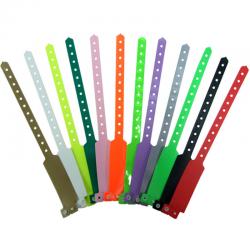
- Prisons use RFID mainly for identification, headcounts, movement logging, access control, key and tool control and audit trails.
- Passive UHF wristbands suit counts at doorways; active RFID or RTLS is needed for continuous real-time location; HF cards suit staff access.
- Key and tool control is often the quickest, least contentious win because it tracks objects, not people.
- RFID data about inmates, staff and visitors is personal data: deployments must be lawful, proportionate, secure and governed by clear policy.
- Technology supports supervision but never replaces trained officers, physical security or due process.
Why RFID fits correctional facilities
A correctional facility is, operationally, a place where the location and status of every person and many objects must be known and recorded at all times. Officers conduct repeated headcounts, escort people between housing units, courts, clinics and workshops, control keys and tools, manage visitors and log the handling of property and evidence. Much of this is still done with registers, clipboards and radio calls, which are slow, error-prone and hard to audit.
RFID lets an identifier be read without line of sight, often several at once and without stopping the person. That makes it useful for counting people passing a doorway, confirming who entered a zone, and proving which key or tool left a cabinet and when. If you are new to the basics, start with How RFID Works; this chapter assumes you know the difference between passive and active tags.
The aim is not surveillance for its own sake. A well-designed system gives administrators faster and more accurate counts, a reliable audit trail, and earlier warning of incidents, while freeing officers to spend more time on the human side of custody.
Main use cases
Inmate identification wristbands
Each person in custody wears a wristband containing an RFID inlay, usually printed with a photo, name and registration number. The band is tamper-evident: it cannot be removed without cutting or visibly damaging it, and some designs include a conductive loop so that cutting the strap disables the tag or, on active designs, triggers an alert. The tag itself carries only a reference number; identity details stay in the facility database.
Automated headcounts and roll calls
Readers at housing unit doors, dining halls and yards can count wristbands passing through, or a handheld reader can sweep a unit and compare reads with the expected roster. The system highlights who is missing or out of place, so officers can focus on resolving exceptions rather than counting everyone by hand.
Movement logging between zones
Doorway readers record passage between zones such as housing, workshop, clinic, school and visiting areas. Movements can be checked against authorised schedules and escorts, and the log provides a time-stamped history that helps in investigations and reviews.
Staff and visitor access control
Staff carry HF access cards for secure doors and turnstiles, often combined with PIN or biometrics at high-security points. Visitors receive temporary cards or wristbands linked to a registered visit, valid only for specified areas and times and collected on exit, giving a clear record of who was inside at any moment.
Staff duress and safety
Active RFID or RTLS badges with a duress button allow an officer to raise an alarm that shows their location on the control room screen. Some systems also detect a man-down condition through a tilt sensor. This is one of the strongest safety arguments for real-time location technology.
Key and tool control
This is a classic, high-value application. Keys are attached to RFID fobs and stored in electronic cabinets that release them only to authorised staff and record every withdrawal and return. Workshop and kitchen tools - knives, cutters, hammers - are tagged so that end-of-shift checks confirm everything has been returned before inmates leave the area. Because it tracks objects rather than people, key and tool control is usually the least contentious place to start.
Evidence and property rooms
Personal property taken at admission, and evidence held for proceedings, can be bagged and tagged with UHF labels. Each movement is logged, building a chain of custody and making periodic audits fast. The approach is the same as asset tracking covered in the RFID Applications chapter.
Medication and meal distribution records
Scanning a wristband at the point of distribution, together with the medication or special-diet item, creates a record of who received what and when. This supports health care duties, helps prevent errors, and gives evidence if a complaint is made.
Vehicle entry at gates
Long-range UHF windshield tags or RFID gate systems identify authorised staff and supply vehicles at the outer gate, while sally-port procedures, inspection and manual verification continue as usual.
In the real world
Technology choices
No single RFID technology covers every use case. Most facilities combine two or three.
- Passive UHF wristbands and labels (EPC Gen2 / ISO/IEC 18000-63, 865-867 MHz in India) give read ranges of a few metres at doorways and handle many tags at once. Readers only detect tags when they pass a read point, so they provide checkpoint data, not continuous location. Note that the human body absorbs UHF energy, so wristband inlays must be designed for on-body use and tested in place. See RFID wristbands and cards.
- Active RFID and RTLS use battery-powered tags that beacon regularly to a network of receivers, giving room-level or better location in real time. They suit duress alarms and high-risk units but cost more, need battery management and a careful infrastructure design.
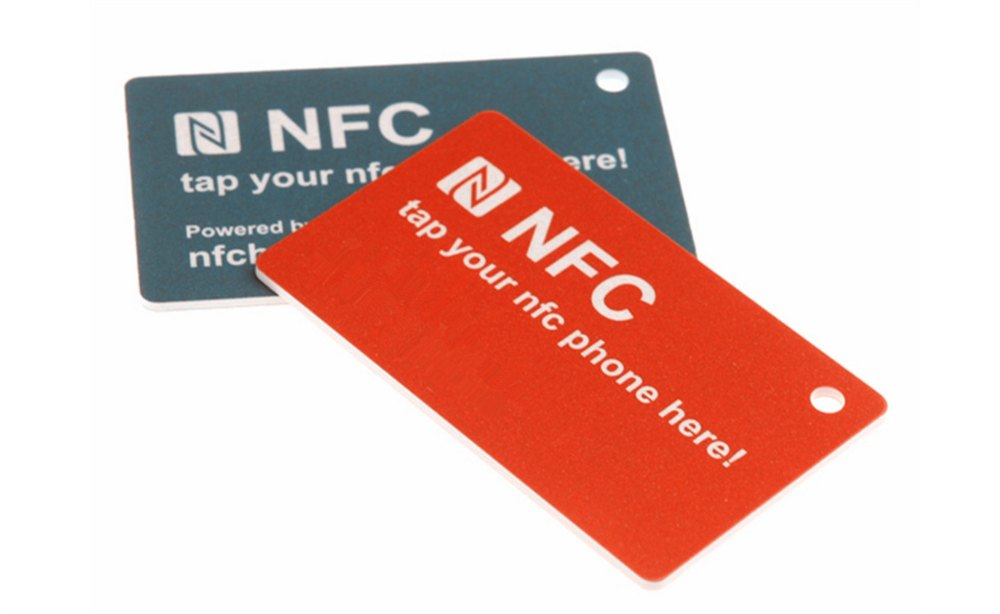
- HF cards (ISO/IEC 14443 or 15693) are the norm for staff access control at doors and turnstiles, with cryptographic chips preferred so cards cannot simply be cloned.
- Fixed readers at doorways, usually with overhead or side-mounted antennas, create read zones at transitions. Fixed RFID readers should be placed where people pass at walking pace and in single file where possible.
- Ruggedised, tamper-proof hardware is essential. Readers, antennas and cabling should sit inside vandal-resistant enclosures or above ceilings, with security screws and no exposed connectors in inmate areas. Handheld readers used in units should be robust and lanyard-secured.
Remember India's regulatory limits for UHF: 865-867 MHz with a maximum of 4 W EIRP (1 W transmitter power), so reader configuration must stay within these limits. A professional site survey matters more than usual in prisons, because thick concrete, steel doors and bars reflect and block RF signals.
Integration with jail management software
RFID reads only become useful when they are linked to the facility's records. In practice, middleware collects reads from readers, filters duplicates, and converts them into events such as "entered workshop" or "key 14 withdrawn". These events are passed to the jail or prison management system that holds admission records, classification, schedules, court dates and visitor lists.
In India, prisons are a state subject and each state administers its institutions under its own prison manual and rules, with model guidance issued at national level. There are also national e-Prisons software initiatives that provide prison and visitor management applications to states. An RFID project should be designed to work alongside whichever official system a state uses, through approved interfaces, rather than creating a separate and conflicting database. Read about the integration layer in RFID Middleware & Software.
Good integration also means role-based access to data, full audit logs of who viewed or changed records, time synchronisation across all readers, and offline buffering so that reads are not lost if the network fails.
Benefits and limits
Benefits
- Faster, more frequent counts with fewer manual errors.
- Time-stamped audit trails for movements, keys, tools, property and medication.
- Quicker detection of missing persons, unreturned tools or unauthorised zone entry.
- Improved staff safety through duress alarms and location awareness.
- Evidence to support investigations, inspections and responses to complaints.
Limits
- Passive RFID cannot tell you where someone is between read points.
- Read reliability is never 100 percent; body shielding, crowding and metal can cause missed reads.
- Wristbands can be damaged, shielded or swapped, so RFID must be backed by photo checks and officer verification.
- Infrastructure in old buildings can be expensive and disruptive to install.
- Systems need ongoing maintenance, battery replacement for active tags, and trained administrators.
Ethics, human rights and data protection
People in custody retain their fundamental rights, including dignity and privacy to the extent compatible with lawful detention. Staff and visitors have privacy rights too. Any RFID deployment in a correctional setting must therefore be approached with particular care.
Legal basis and proportionality
Monitoring should have a clear legal basis under the applicable prison rules, be authorised by the competent authority, and follow any guidance from courts and human rights bodies. It should be proportionate: use the least intrusive technology that meets a defined security or welfare need. Continuous location tracking of every inmate needs a much stronger justification than doorway counts or key control.
Data protection
Tag reads linked to identifiable people are personal data. India's Digital Personal Data Protection Act 2023 sets general obligations for handling digital personal data, and while certain exemptions may apply to state functions, the principles of purpose limitation, data minimisation, accuracy, security and limited retention remain good practice. Keep personal details off the tag, encrypt data in transit and at rest, define retention periods, and restrict access by role. Our chapter on RFID Security & Privacy covers technical defences in more detail.
Transparency and governance
Publish a written policy that explains what is monitored, why, who can access the data and how long it is kept. Inform inmates, staff and visitors. Establish oversight - for example periodic review by a senior officer or committee - and a route for complaints and corrections.
Human supervision and training
Technology complements human supervision; it does not replace it. Safe custody depends on trained officers, relationships, observation and judgement. Staff should be trained not only on operating the system but on its limits, on data handling rules, and on responding to alerts lawfully and respectfully.
Use case summary table
| Use case | Typical technology | Main benefit | Caution |
|---|---|---|---|
| Inmate identification | Tamper-evident passive UHF (or UHF + HF) wristband | Fast, consistent identification | Pair with photo checks; bands can be damaged or swapped |
| Headcounts and roll calls | Doorway UHF readers, handheld sweeps | Fewer manual counts, quick exception lists | Keep physical verification for formal counts |
| Movement logging | Fixed UHF readers at zone transitions | Time-stamped movement history | Checkpoint data only; define retention |
| Real-time location | Active RFID / RTLS | Live location in high-risk areas | Strong justification needed; cost and batteries |
| Staff access | Secure HF cards, often with PIN or biometrics | Controlled, audited door access | Use cryptographic cards; revoke promptly |
| Staff duress | Active RTLS badge with alarm button | Faster response with location | Test coverage in every area regularly |
| Visitor management | Temporary HF card or UHF wristband | Clear record of who is inside | Collect on exit; inform visitors |
| Key and tool control | RFID key cabinets, UHF/HF tool tags | Accountability for high-risk items | On-metal tags needed for many tools |
| Evidence and property | UHF labels on bags and boxes | Chain of custody, fast audits | Tag durability; strict access rights |
| Medication and meals | Handheld reader scans wristband and item | Distribution records, fewer errors | Health data needs extra protection |
| Vehicle gates | Long-range UHF windshield tags | Faster authorised entry | Never skip inspection procedures |
Implementation steps
- Define objectives and legal basis. List the specific problems to solve, confirm authority under the applicable prison rules, and record the purpose and proportionality assessment.
- Consult stakeholders. Involve security staff, medical teams, IT, legal advisers and, where appropriate, oversight bodies before choosing technology.
- Survey the site. Assess construction materials, read points, power, cabling routes and network coverage; test sample tags on people and objects in the real environment.
- Choose technology per use case. Passive UHF for checkpoints, active RTLS only where justified, secure HF for access, ruggedised enclosures throughout.
- Design integration and data governance. Agree interfaces with the official prison management software, access roles, retention, encryption and audit logging.
- Pilot in one area. Key and tool control or a single housing unit is a good pilot. Measure read accuracy and staff workload against the manual baseline.
- Train staff and publish policy. Cover operation, limits, data rules and alert response.
- Scale in phases and review. Expand only after the pilot meets its targets, and review the system, its data use and its proportionality at regular intervals.
The general method is described in our RFID Implementation Guide. For help scoping a correctional or other high-security project, our RFID consulting team can assist with surveys, technology selection and pilots, and integrators who want structured, hands-on training can look at our RFID courses in India.
Help India adopt this fast-growing technology - teach, consult or build projects with Indian RFID.
Frequently asked questions
Can RFID replace manual headcounts in a prison?
It can automate most routine counts and flag discrepancies quickly, but facilities normally keep physical verification for formal counts, emergencies and any mismatch. RFID reduces the effort and errors of counting; it does not remove the officer's responsibility.
What type of RFID wristband is used for inmates?
Typically a tamper-evident wristband with a passive UHF inlay for doorway and zone reads, sometimes combined with HF for close-range verification. Where real-time location is required, a battery-powered active tag or RTLS badge is used instead.
Is RFID tracking of inmates legal in India?
Prisons are administered by states under their own prison manuals and rules, and any monitoring must follow those rules, court directions and data protection law such as the DPDP Act 2023. Facilities should take legal advice and document the purpose and safeguards before deployment.
Which prison RFID use case should be implemented first?
Key and tool control or staff access control is often a sensible first phase, as it delivers clear accountability with fewer privacy concerns. Inmate headcounts and movement logging can follow once infrastructure, policies and training are proven.
Can inmates defeat RFID wristbands?
They can try to remove, shield or swap them, which is why wristbands are tamper-evident, readers raise alarms for missing or unexpected reads, and RFID is combined with photo verification, CCTV and officer checks.
Join the 1-month Certified RFID Specialist Program - live online. New batch 12 January 2027.