RFID Tags vs Inlays vs Labels: What You Are Actually Buying and When Each Makes Sense
posted on: 15 Oct, 2026 | 06:26:51 PM by Indian RFID
When people ask for "RFID tags", they may mean four or five very different products. A supplier quoting for an inlay and a customer expecting a ready-to-stick printed label will both be disappointed. Understanding the formats saves time in purchasing and avoids surprises on the production line.
The building block: chip plus antenna
Every passive RFID tag contains two parts: a tiny integrated circuit (the chip) and an antenna, usually etched aluminium on a thin PET film for UHF, or a copper or aluminium coil for HF. The chip stores the identifier and any user data; the antenna harvests energy from the reader and sends the reply. Everything else - paper, adhesive, plastic housing - is packaging that decides where and how the tag can be used.
Dry inlays
A dry inlay is the chip and antenna on a carrier film, without adhesive. Dry inlays are supplied on reels and are meant to be converted into something else: sewn into a garment label, laminated into a card, inserted into a hang tag, or embedded into a plastic housing. If you have your own converting or label production, or you are working with a trims supplier, dry inlays give the most flexibility.
Wet inlays
A wet inlay adds a pressure-sensitive adhesive and a release liner, so it can be applied directly to a carton or item. Wet inlays are useful for quick tagging where printing is not needed - for example, applying a tag inside a box flap or behind an existing barcode label. They are plain and not designed to be printed on.
RFID labels (smart labels)
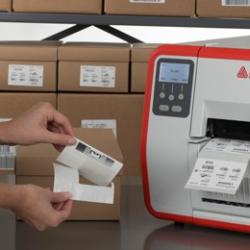
An RFID label is an inlay sandwiched between a printable face stock and an adhesive liner. It looks like a normal barcode label and can be printed with text, logos and barcodes on an RFID-enabled thermal transfer printer, which also encodes the chip in the same pass. This is the format most warehouses, 3PLs and manufacturers end up using, because one label carries both human-readable information and the RFID data.
Face stocks can be paper for cartons, or synthetic (polypropylene, polyester) where moisture, abrasion or longer life is a concern.
Hang tags and care labels
For apparel, the inlay is usually built into a printed card hang tag or into a fabric/satin care label. Hang tags are removed at sale; care labels stay in the garment, so they must survive washing, which requires inlays designed for laundering. These are specialised products and should be specified with the retailer's requirements in mind.
Hard tags and special-purpose tags
When the environment is tough, the inlay is moulded into a rigid or semi-rigid housing. Common examples include:
- On-metal tags with a spacer or special antenna design so they read when fixed directly to steel racks, IT equipment or tools.
- Jewellery tags - small tags designed to hang on rings, chains and bangles without damaging the piece.
- Cable ties and seals for bags, containers and tamper evidence.
- Laundry tags that survive industrial washing and ironing.
- Windshield tags for vehicles, designed to be destroyed if removed.
- Wristbands in silicone, PVC, fabric or paper.
How to decide
- Does the tag need printing? If yes, choose an RFID label or printed hang tag. If no, a wet inlay may do.
- What is it attached to? Metal and liquid-filled items need specially designed tags; cardboard and fabric do not.
- How long must it last? A shipping label needs to survive weeks; an asset tag may need to survive years outdoors.
- Who applies it, and how? Manual application, a label applicator, or insertion into another product during manufacturing each favour different formats.
- What volumes and lead times do you need? Standard inlays and labels are quicker than custom-shaped hard tags.
Do not forget the chip
Within each format you can also choose different chips. Differences include EPC memory size, availability of user memory, read sensitivity and features like permanent locking. For most retail and logistics uses a standard 96-bit or 128-bit EPC is enough; asset and maintenance applications sometimes benefit from user memory.
Testing on your product
Inlay and tag performance depends on what it is attached to. A tag that reads at eight metres on cardboard may read at one metre on a denim pocket or a box of shampoo bottles. Always test samples on your real product before ordering in volume. For export garments, buyers often specify approved inlays, which our exporter and importer page explains in more detail.
Indian RFID supplies dry and wet inlays, printed RFID labels, hang tags, care labels and a wide range of hard tags. To request samples or a quotation, WhatsApp +91-9717122688 or email gm@indianbarcode.com with your product type and monthly quantity.
Contact Indian RFID
Indian RFID is the RFID arm of Mindware, which also delivers complete barcode solutions, barcode labels and the full range of Mynds brand barcode ribbons.
Phone / WhatsApp: +91-9717122688
Email: gm@indianbarcode.com
Send your requirement