RFID for 3PL Warehouses: Handling Many Clients, Many SKUs and Strict SLAs
posted on: 15 Oct, 2026 | 06:38:51 PM by Indian RFID
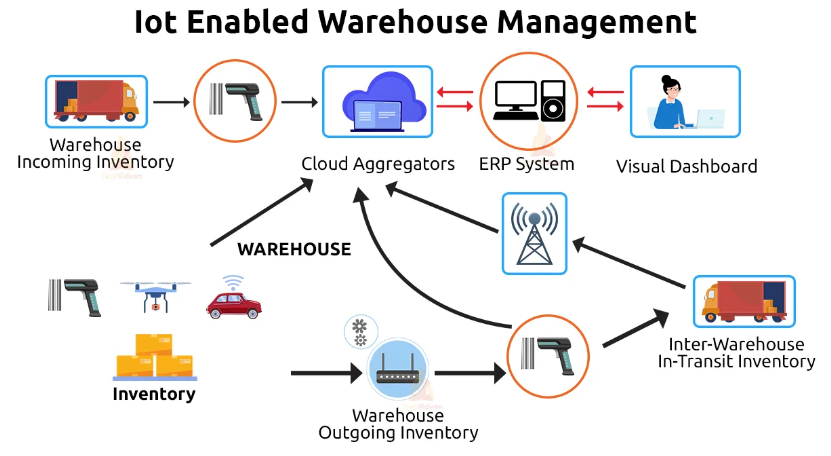
Third-party logistics providers face a different set of problems from a company running its own warehouse. A 3PL in a hub like Bhiwandi, Gurugram, Chakan or Hosur may handle fashion for one client, electronics for another and FMCG for a third, each with its own labels, systems and service level agreements. RFID can help, but only if it is applied where it creates value for both the 3PL and its clients.
Where a 3PL feels the pain
- Receiving disputes - client says 500 units were sent, the 3PL counted 492. Who is right?
- Inventory accuracy SLAs - contracts often include accuracy targets with penalties.
- Audit time - clients ask for periodic stock audits, which tie up staff and space.
- Returnable assets - crates, cages, roll containers and pallets go missing between clients, transporters and stores.
- Mixed technology - some clients send source-tagged RFID goods, others only barcodes.
Use case 1: Receiving source-tagged goods
When a client's goods already carry RFID tags, the 3PL can read inbound cartons at the dock or on a conveyor and compare with the advance shipping notice. Discrepancies are identified before the goods are put away, with a record of exactly which EPCs were received. This turns many disputes into a simple data comparison.
Use case 2: Faster client audits
For clients with item-level tags, a cycle count with handheld readers takes a fraction of the time of a barcode count. That reduces the operational cost of audits and gives the 3PL a strong service story to tell prospective clients.
Use case 3: Returnable transport items
Even when the goods themselves are not tagged, the 3PL can tag its own crates, cages and pallets with durable UHF tags. Reading them at the dock shows which assets went to which client or transporter and which came back. Asset losses are often significant and under-measured; tagging them is a self-contained project that does not depend on any client.
Use case 4: Location-level visibility
Tagging rack locations and pallet labels allows forklifts or handhelds to confirm put-away and picking locations. Fewer mis-slotted pallets means fewer "lost" pallets and less time searching.
Keeping costs fair across clients
A common question for 3PLs is who pays. Some practical models:
- Shared infrastructure - dock gates, readers and software are 3PL investments, recovered through handling rates or as a value-added service.
- Client-specific consumables - tags for a client's goods are billed to that client, or the client supplies source-tagged goods.
- Asset tracking - tags on the 3PL's own returnable assets are the 3PL's cost, justified by reduced losses.
Software must handle multi-tenancy
The RFID software layer must keep data separated by client, map each client's EPC scheme to its item master, and produce client-specific reports. It also needs to integrate with the 3PL's warehouse management system rather than replacing it. When evaluating solutions, ask how a new client is onboarded and how many configuration steps it takes.
Devices for mixed barcode and RFID operations
Because 3PLs will always handle a mix of barcoded and RFID-tagged goods, devices that do both are valuable. Android mobile computers with 2D imagers and UHF RFID - for example from the Seuic and Datalogic ranges - let the same operator scan barcodes and read tags. Browse options on our mobile computers page.
Data clients will value
Beyond internal efficiency, RFID gives a 3PL better data to share. Client portals or scheduled reports can show received quantities by EPC, stock positions confirmed by the latest count, and returnable asset balances by location. Transparent data builds trust, shortens monthly reconciliation meetings and can become a differentiator when bidding for new contracts.
A sensible first project
For most 3PLs, the best starting point is either returnable asset tracking (self-contained, owned by the 3PL) or RFID receiving for one source-tagged client. Both deliver measurable results within weeks and build the team's experience before a wider rollout.
Indian RFID offers consulting and implementation for warehouses, including a fixed-scope package for 2,000-5,000 sq ft facilities. To discuss your 3PL operation, WhatsApp +91-9717122688 or email gm@indianbarcode.com.
Contact Indian RFID
Indian RFID is the RFID arm of Mindware, which also delivers complete barcode solutions, barcode labels and the full range of Mynds brand barcode ribbons.
Phone / WhatsApp: +91-9717122688
Email: gm@indianbarcode.com
Send your requirement