Library RFID Explained: HF vs UHF, Self-Checkout, Security Gates and Stock Checks
posted on: 15 Oct, 2026 | 06:41:51 PM by Indian RFID
Libraries were among the earliest adopters of item-level RFID, and for good reason. Every book is an individual asset, circulation is constant, and shelf checking by hand is painfully slow. For colleges, universities, schools and public libraries in India considering RFID, this guide explains the main choices and what to expect.
What RFID does in a library
- Faster circulation - books can be issued and returned by placing a stack on a reader pad, rather than scanning each barcode.
- Self-service - members can issue and return books at a self-checkout kiosk.
- Security - gates at the exit detect books that have not been issued.
- Inventory - staff use a handheld reader to scan shelves, finding missing and misplaced books in far less time.
- Returns automation - book drops with readers can check items in automatically.
HF or UHF?
HF (13.56 MHz)
HF has been the traditional choice for libraries. Tags typically follow ISO 15693, and ISO 28560 defines how library data is stored on them, which helps interoperability between suppliers. HF reads at short range, which is exactly what you want at a circulation desk: only the books on the pad are read, not the ones on the trolley beside it. Security function on HF tags is commonly handled with a dedicated bit or an AFI value that is switched at issue and return.
UHF (865-867 MHz in India)
UHF tags are cheaper per tag and read at longer range, which makes shelf inventory faster and allows wider security gates. The flip side is that circulation desks need more careful antenna design to avoid reading nearby books. Some newer installations choose UHF to benefit from the wider ecosystem of readers and lower tag costs.
How to choose: if you prioritise accurate, deliberate circulation and standards-based interoperability, HF remains a strong choice. If your main goal is fast inventory of a large collection and you want lower tag cost, UHF deserves a look. Whichever you choose, avoid mixing technologies within one collection without a clear plan.
Tagging the collection
Converting an existing collection is usually the biggest effort. A typical approach:
- Clean up catalogue data so each book has a correct accession number.
- Place an RFID tag inside the back cover, in a consistent position, away from the spine to reduce tampering.
- At a conversion station, scan the existing barcode and encode the tag with the same accession number.
- Shelve the book back; the tag is now linked to the catalogue.
Large libraries often convert in phases by section, and tag new acquisitions at the time of cataloguing so the problem does not grow.
Media other than books
CDs, DVDs and items with metal content need special tags or careful placement. Thin magazines and spiral-bound reports may need tags placed so they do not bend excessively. Plan for these before ordering tags in bulk.
Integration with library software
RFID hardware must work with your integrated library management system, usually through standard interfaces used for self-service and circulation. Confirm compatibility early: the RFID system should update loans and returns in your existing catalogue, not run a separate database.
Realistic expectations
- RFID security gates deter and detect, but determined tampering such as removing tags is still possible. Tag placement and staff vigilance matter.
- Shelf inventory is far faster than manual checks, but staff still need to resolve the exceptions it finds.
- Members need a short orientation on self-checkout in the first weeks.
What a typical project includes
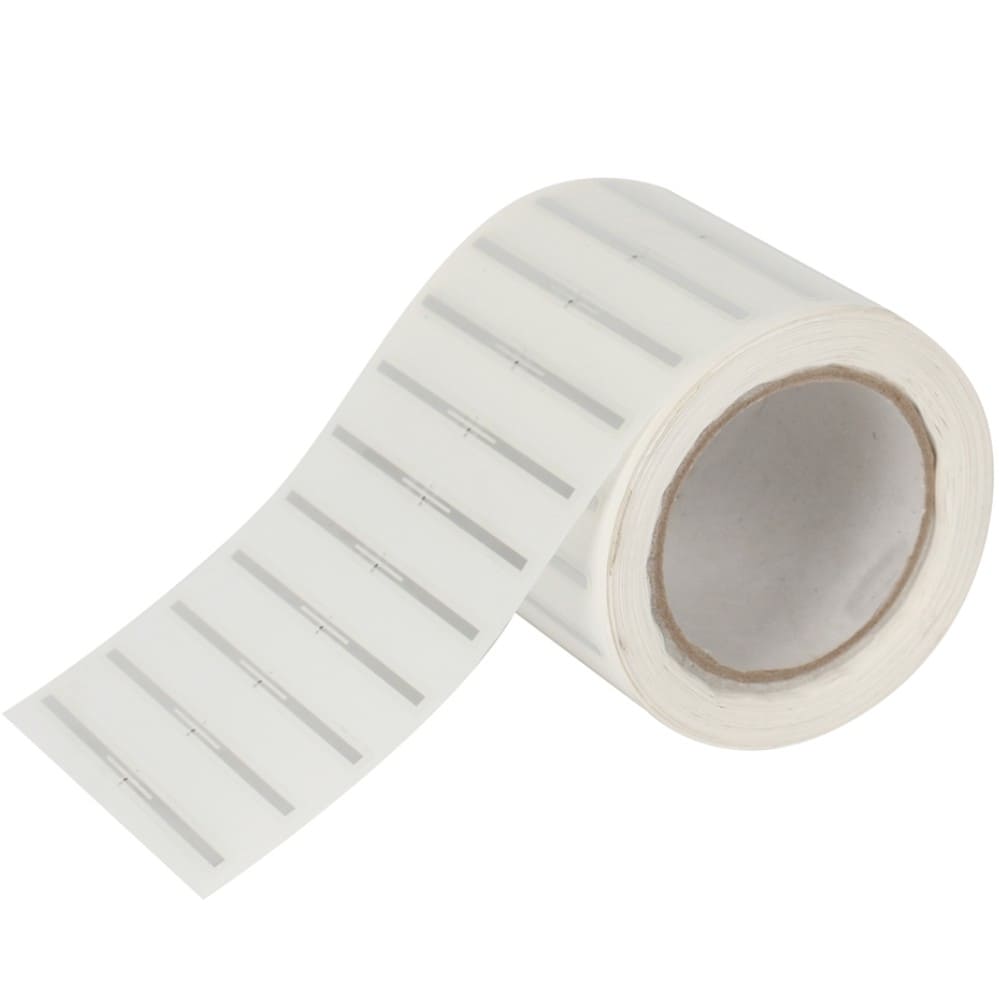
- Library RFID tags for books and media.
- Staff station readers for conversion and circulation.
- Self-checkout kiosk and book drop (optional).
- Security gates at the exit.
- Handheld inventory reader.
- Software integration with the library management system.
You can see examples of how we approach RFID projects on our case studies page, or share your requirements through our requirement form.
For a library RFID proposal based on your collection size and layout, WhatsApp +91-9717122688 or email gm@indianbarcode.com.
Contact Indian RFID
Indian RFID is the RFID arm of Mindware, which also delivers complete barcode solutions, barcode labels and the full range of Mynds brand barcode ribbons.
Phone / WhatsApp: +91-9717122688
Email: gm@indianbarcode.com
Send your requirement